Printing foundations
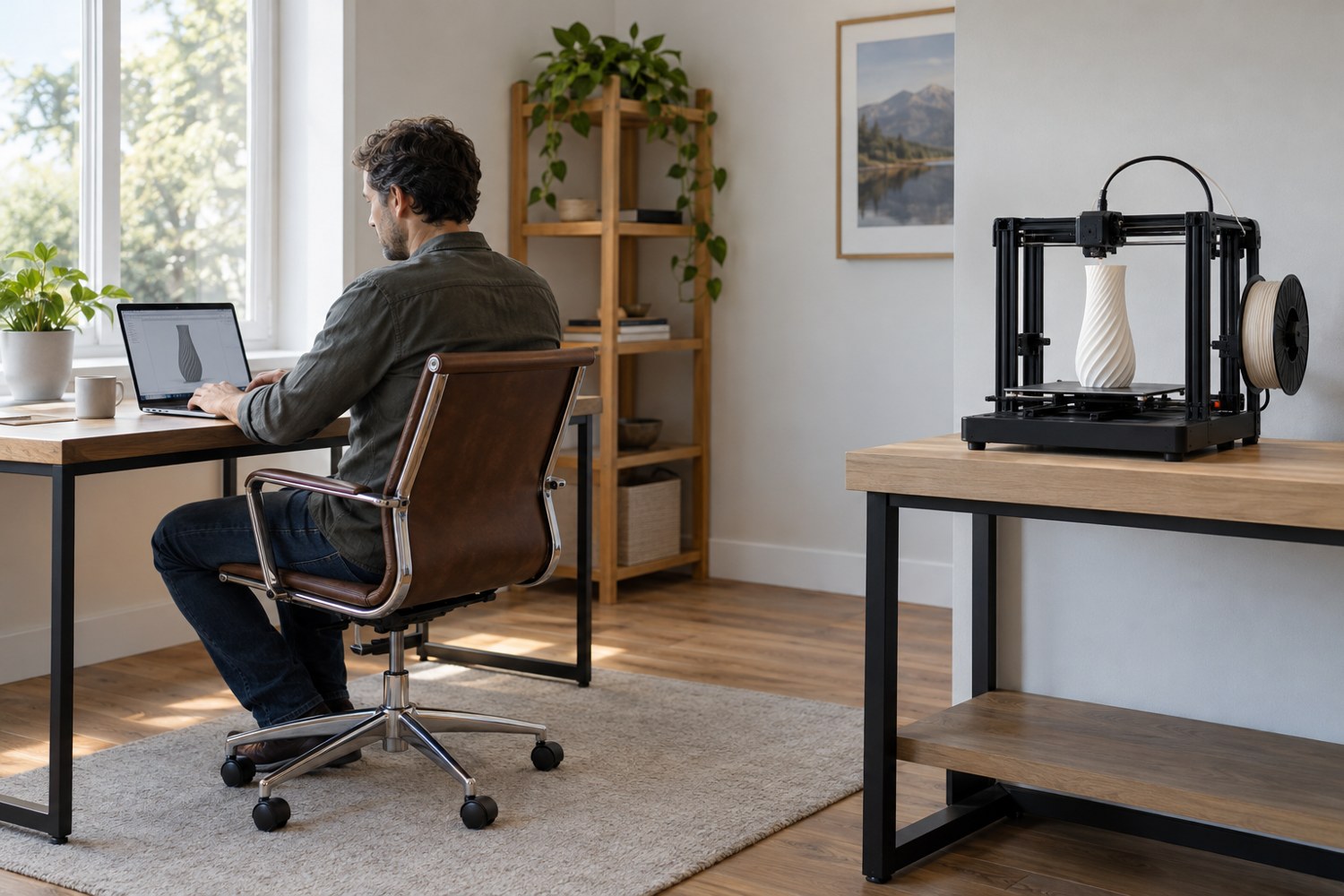
Choose a first 3D printer around the objects you want to make
Start with three objects, their dimensions and the space available for making them. Those decisions narrow the printer search before speed claims do.
Read articleFrom the first preview to a repeatable print.
24 articles
Ideas, decisions & making notesStart with three objects, their dimensions and the space available for making them. Those decisions narrow the printer search before speed claims do.
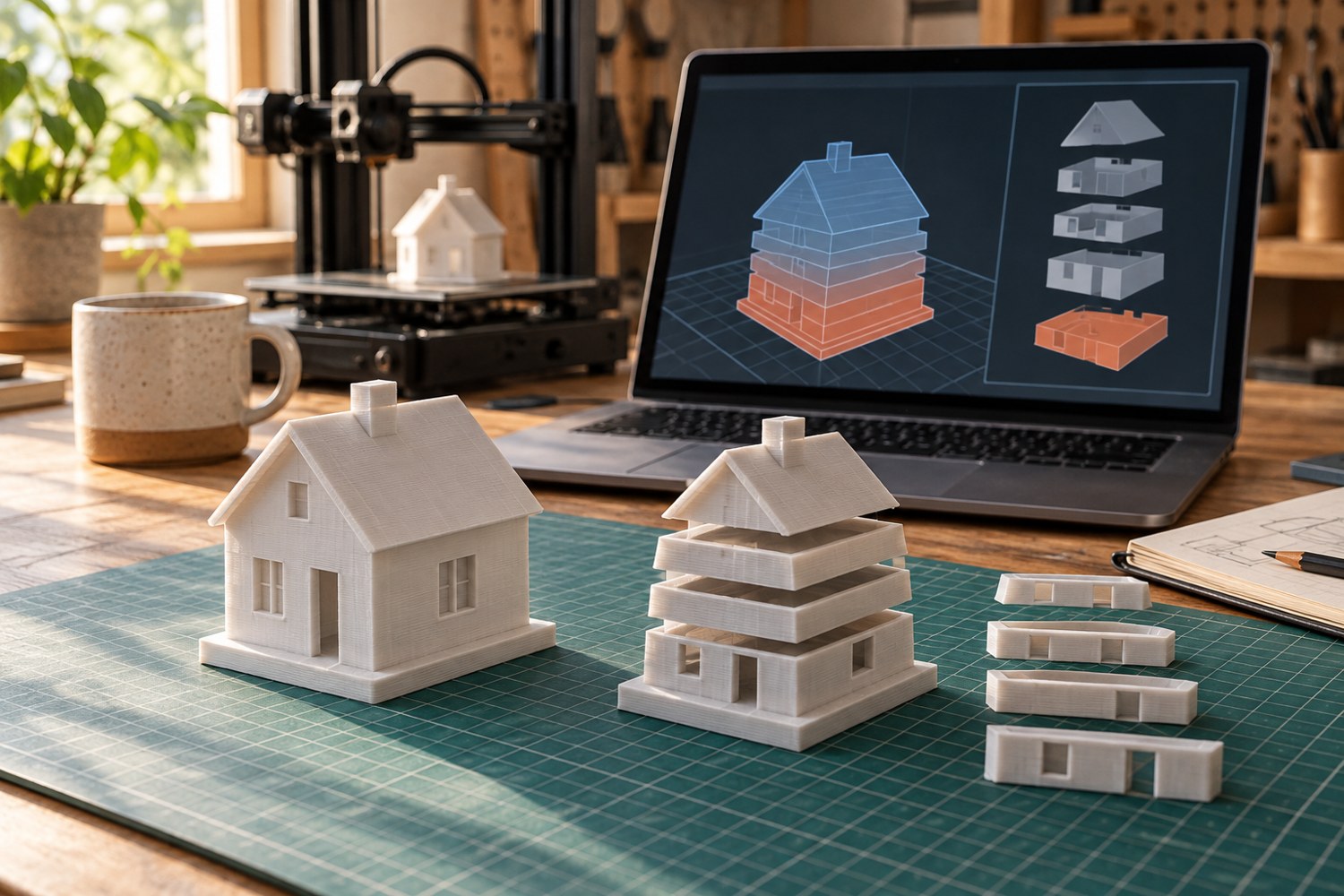
Read articleRead the toolpaths, first layer and delicate features before a file reaches the printer.
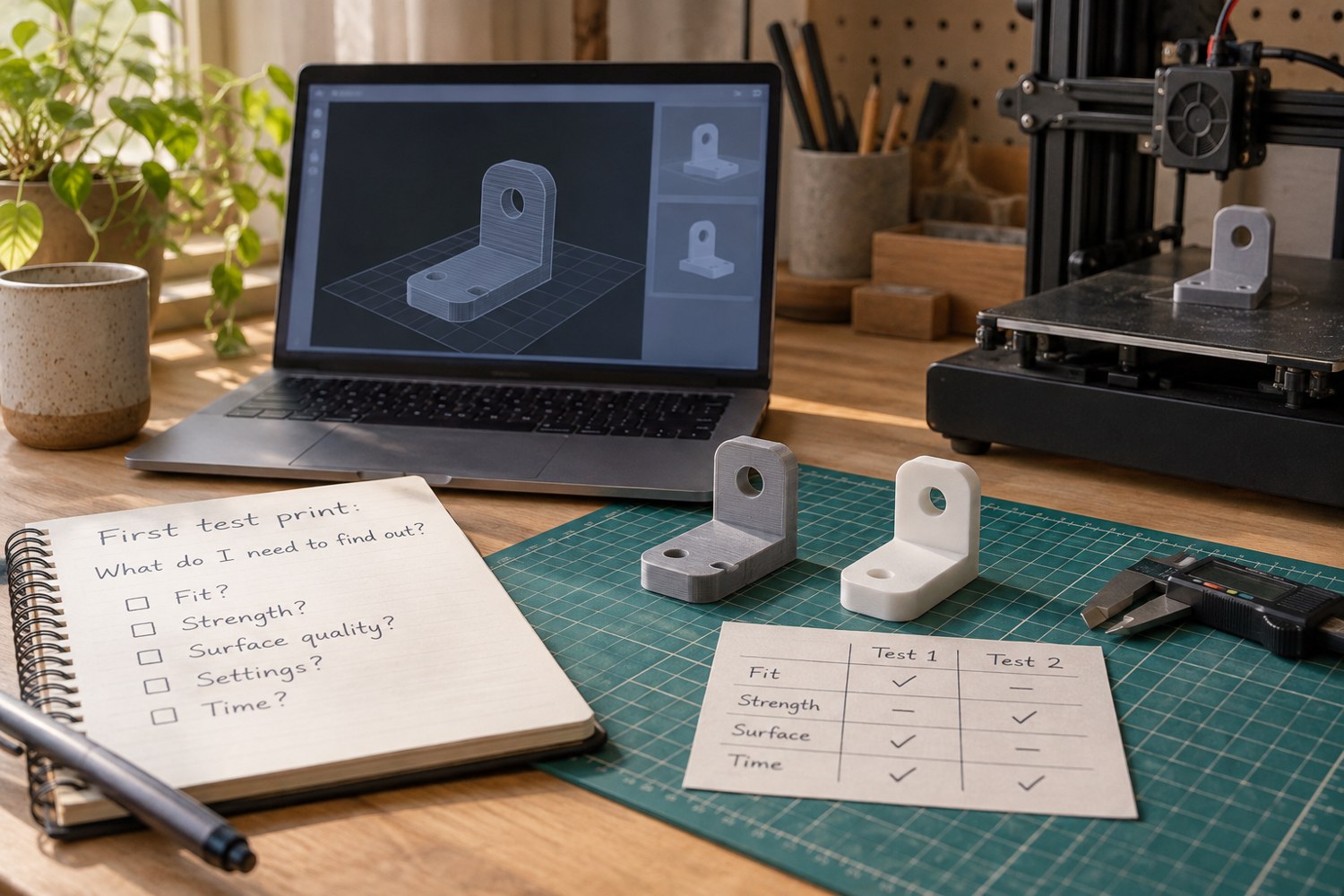
Read articleChoose a small experiment that answers one question about your printer or model.
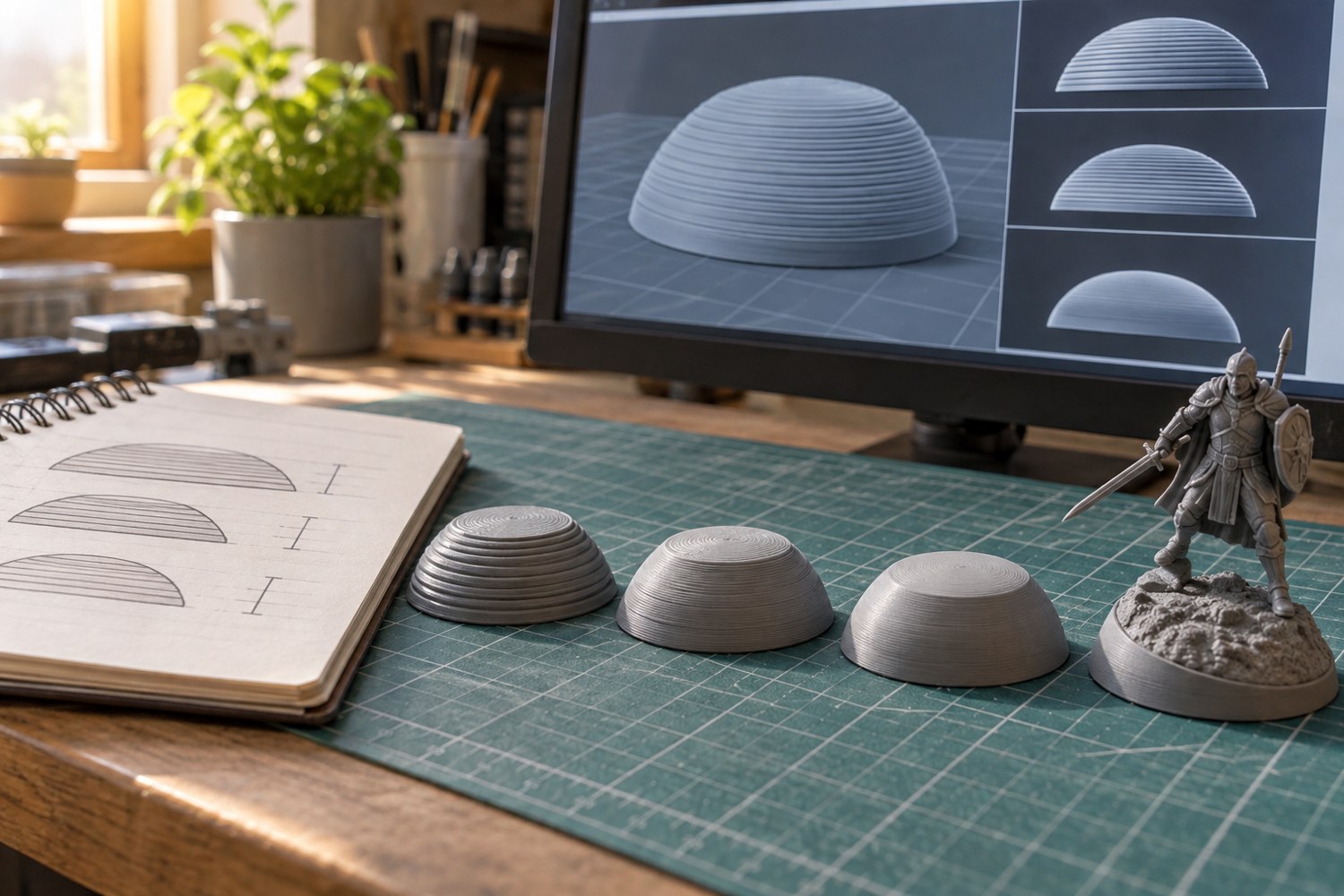
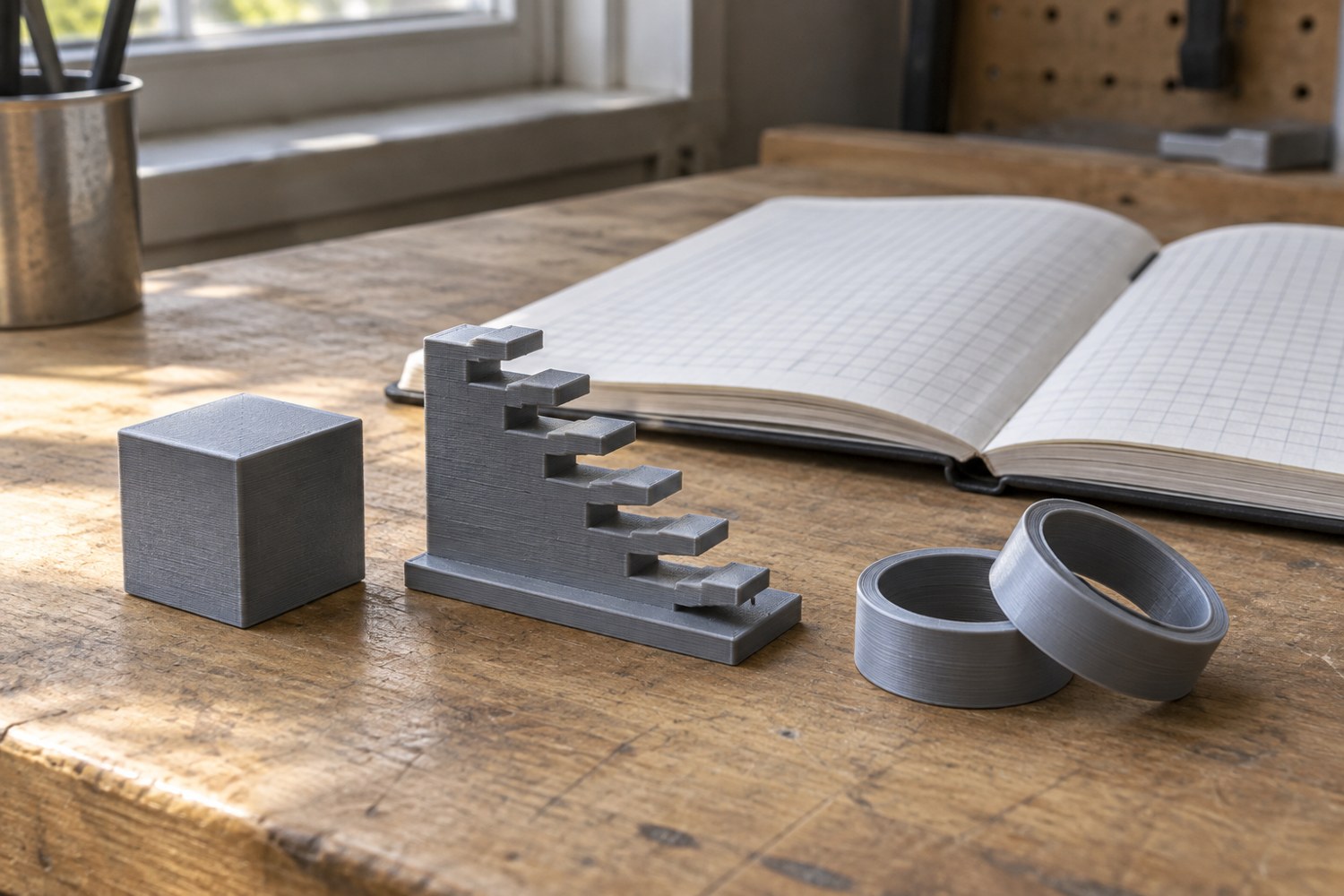
Read articleCompare vertical stepping, surface shape and print time on a rounded display base.
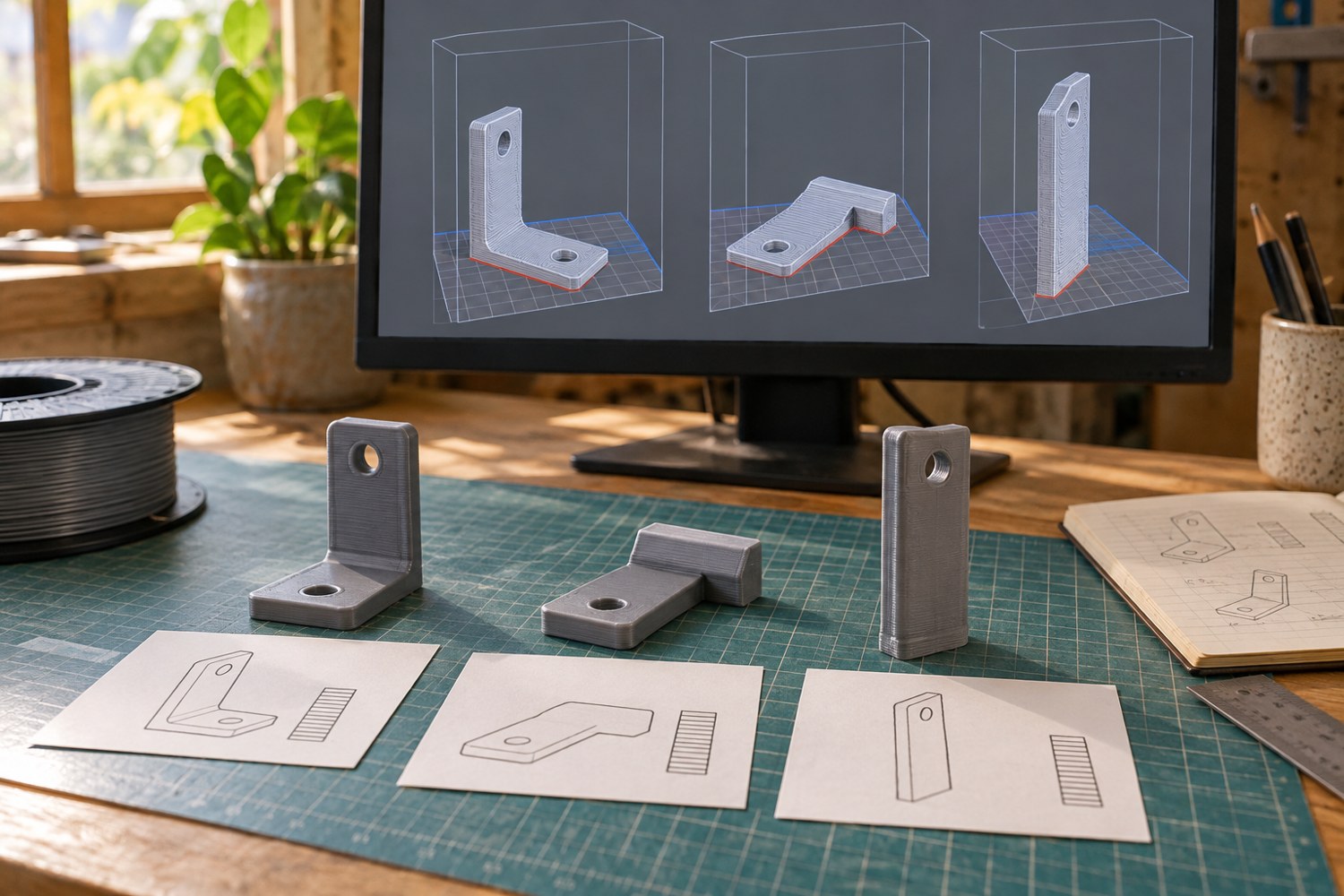
Read articleBalance the visible face, layer direction and assembly access on a non-critical bracket.
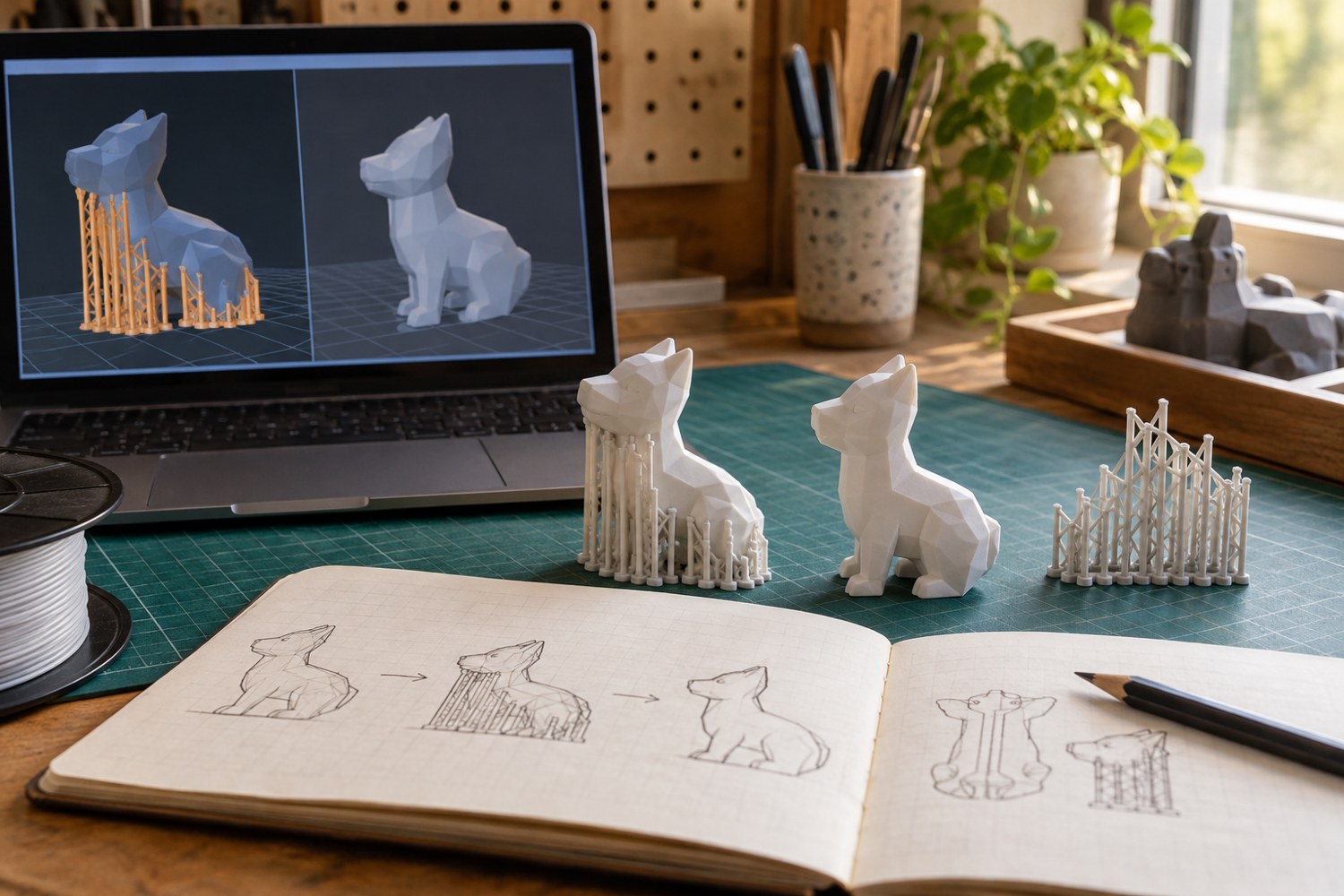
Read articleFind unsupported starts and plan how supports will be removed from the finished object.
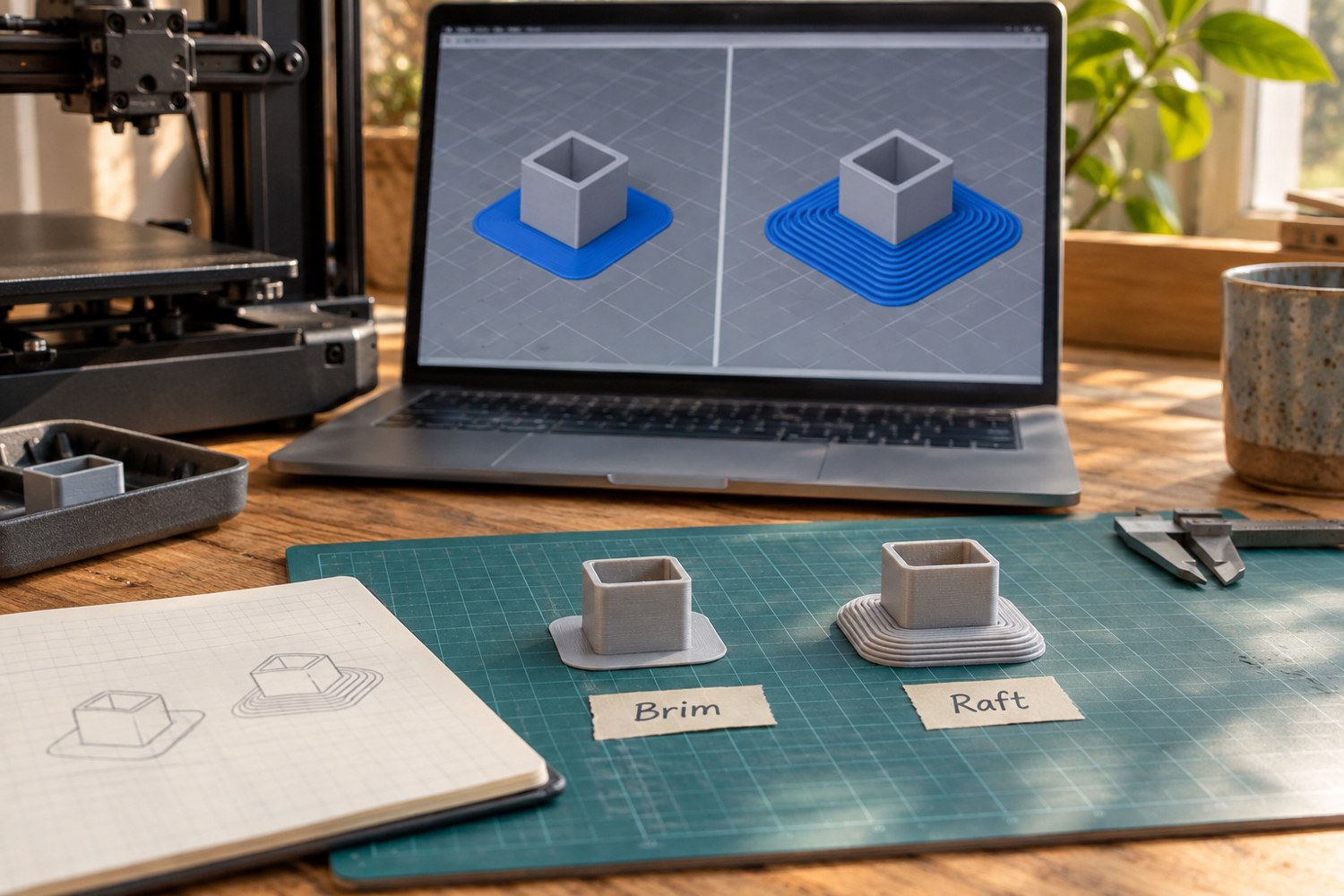
Read articleUnderstand what each temporary foundation changes before adding material under a small print.
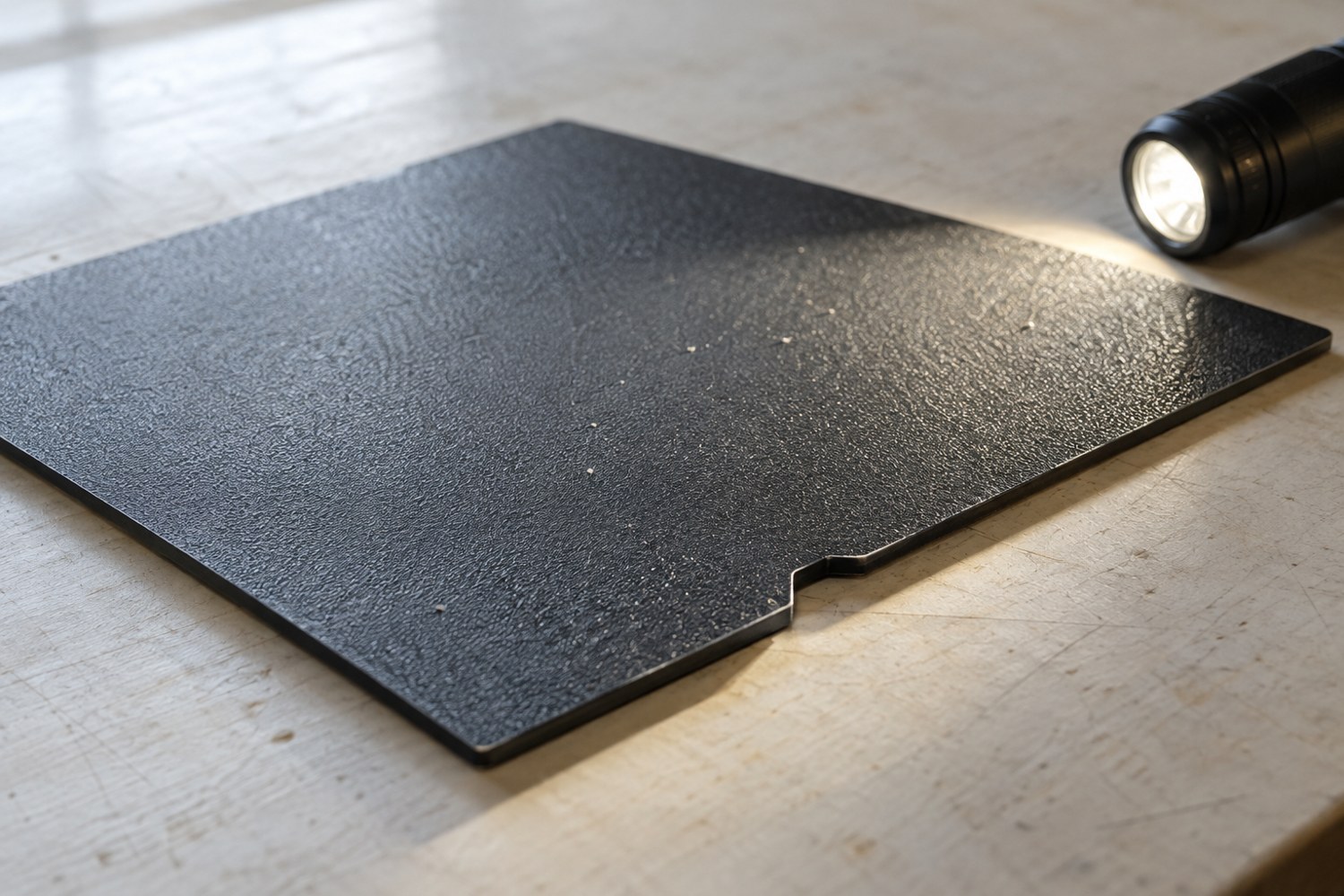
Read articleCheck surface identity, seating and preparation before replacing a spool that may be working normally.
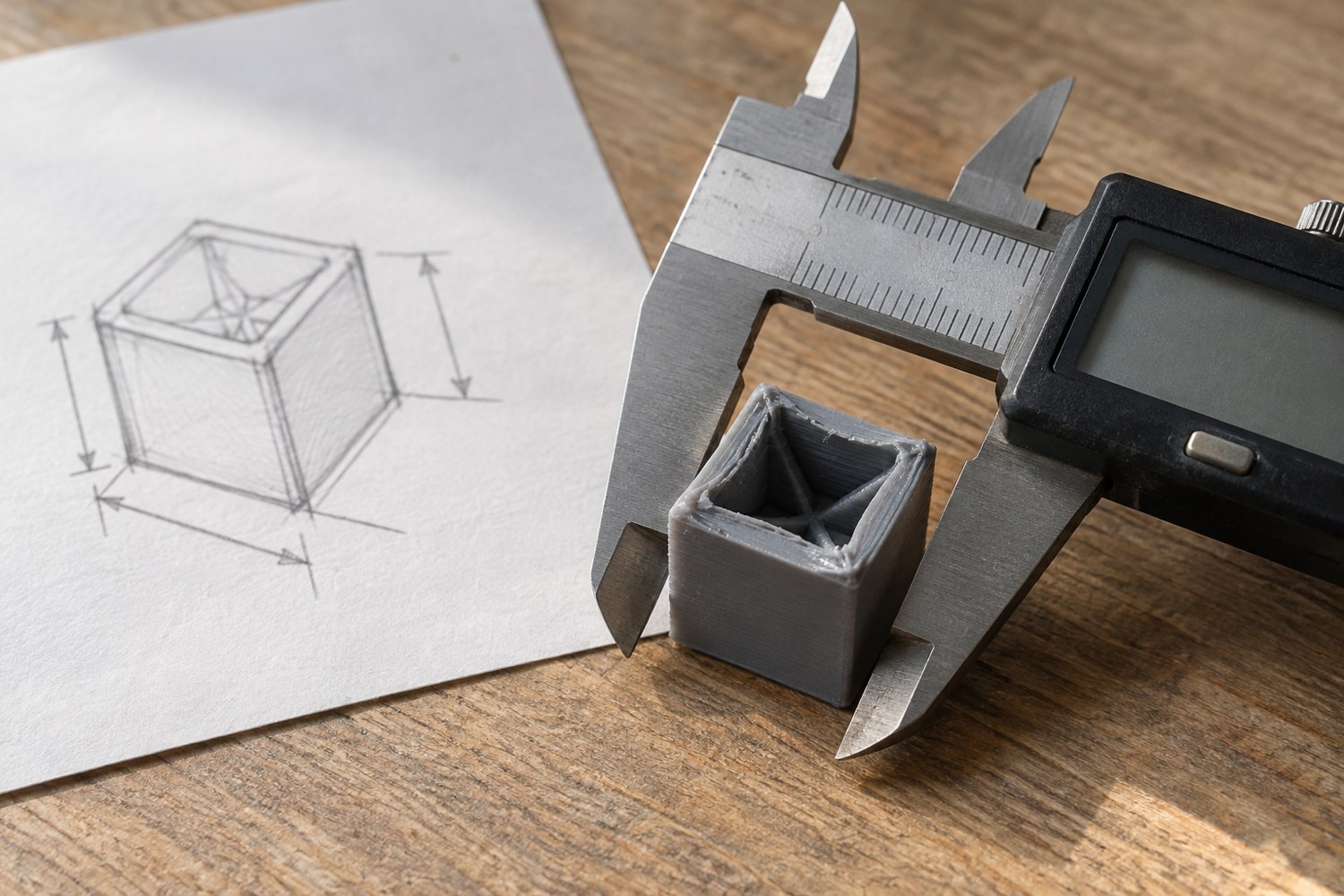
Read articleTurn a failed object into a useful record of where the intended geometry stopped matching the print.
Read articleBuild a material estimate around the final sliced parts, supports and a realistic allowance for revisions.
Read articleSchedule preparation, printing and cleanup as one job that fits the way the workspace is supervised.
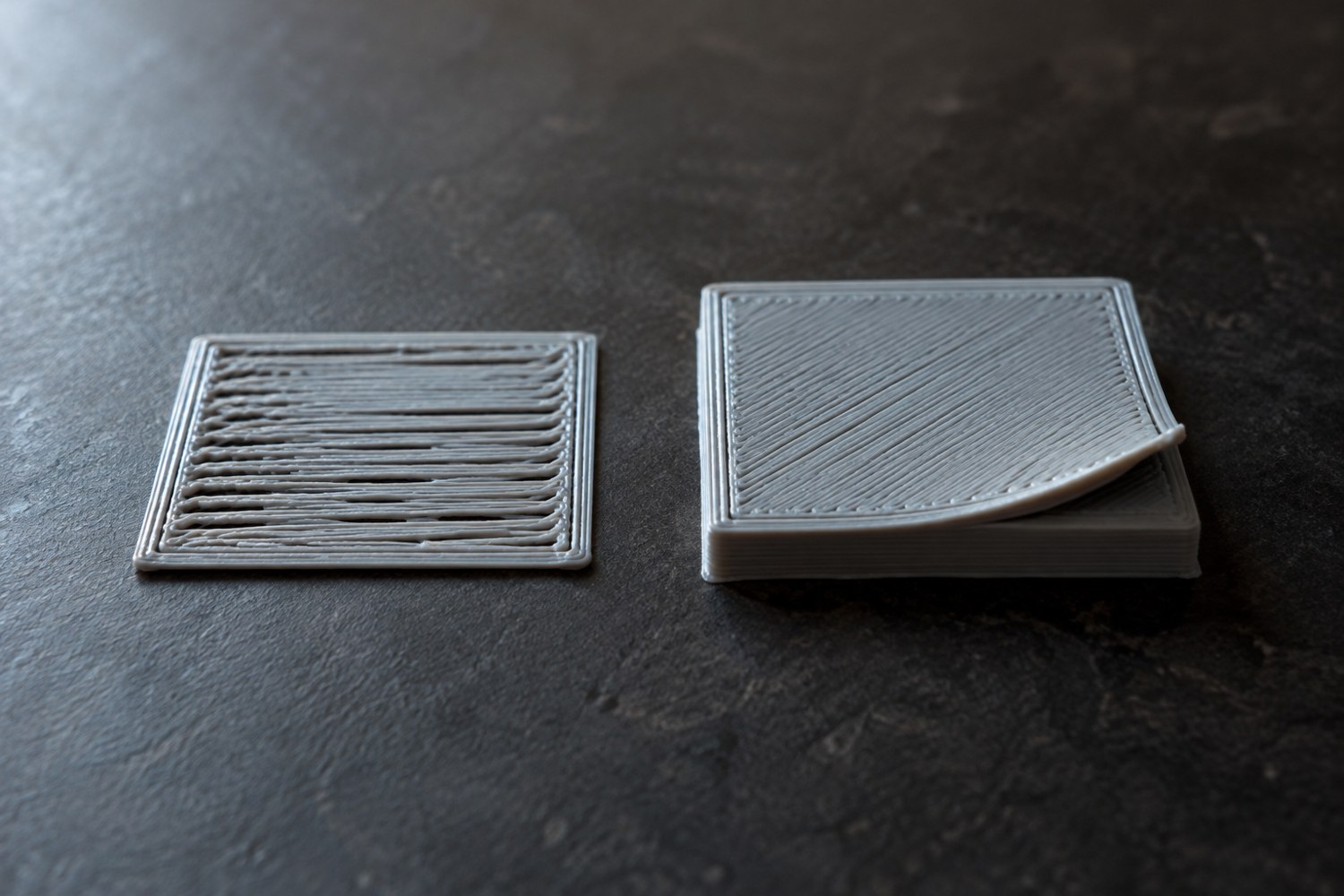
Read articleUse the timing and shape of lifting to distinguish an immediate first-layer fault from later distortion.
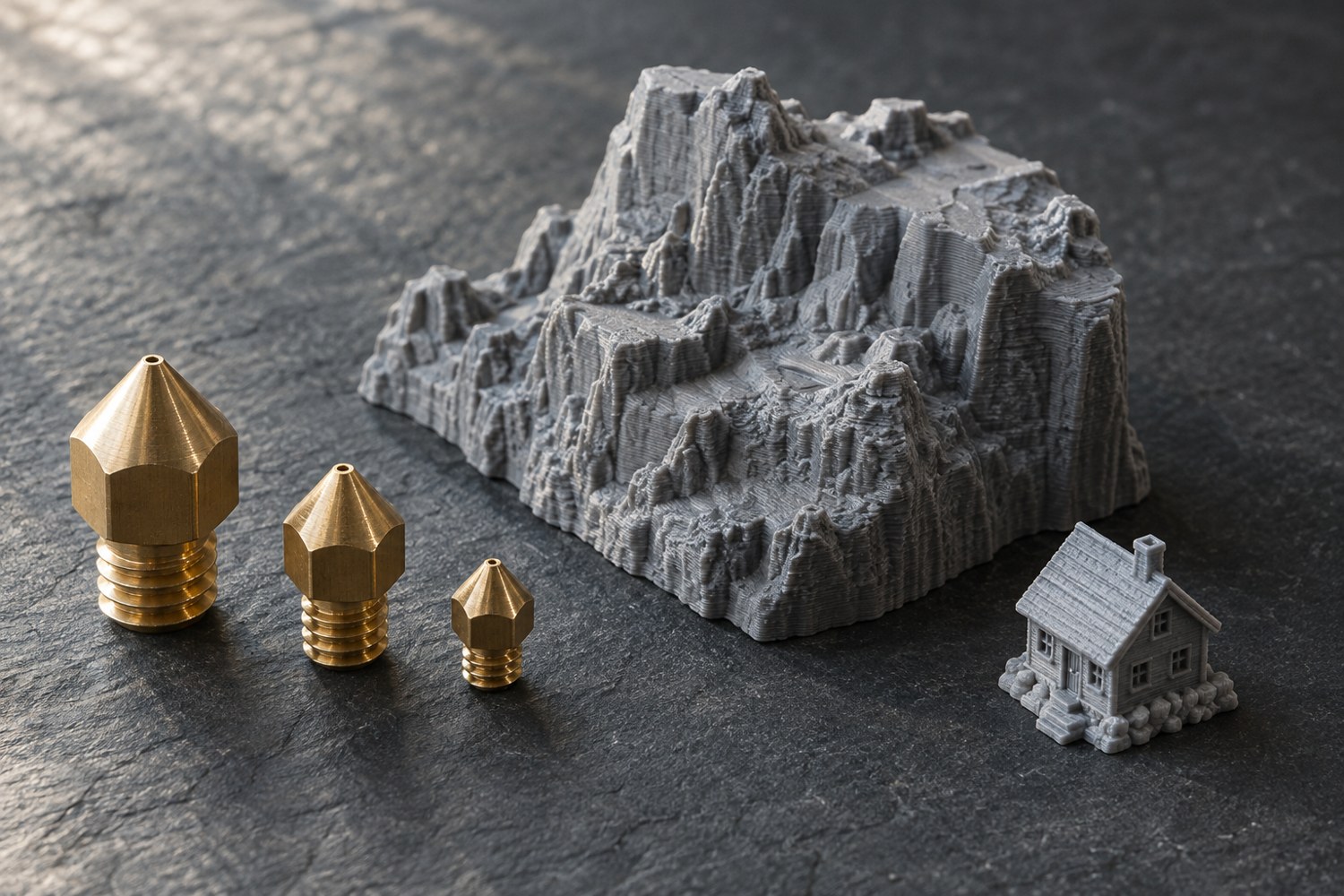
Read articleMatch nozzle choice to the smallest feature that matters, not simply to the overall model size.
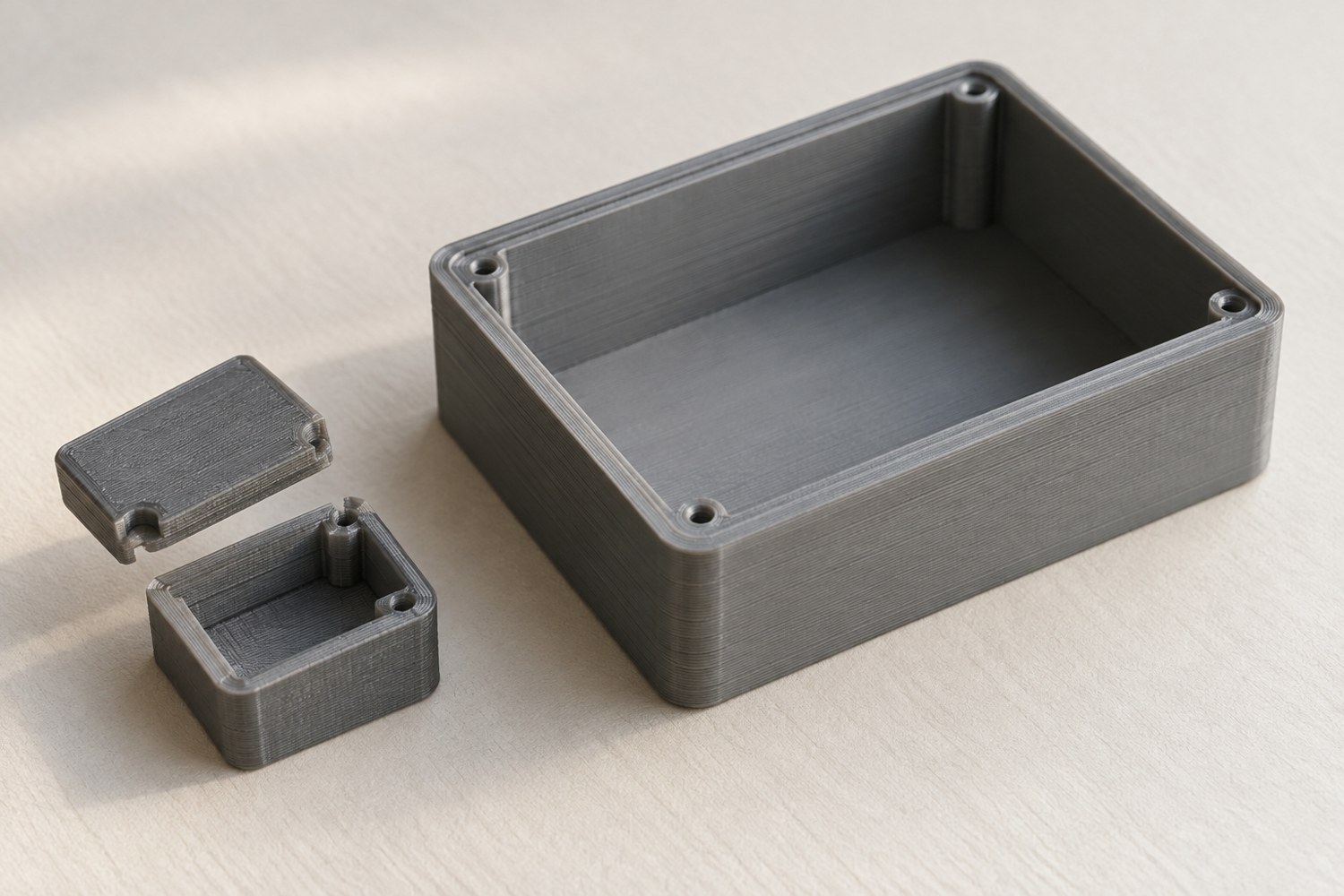
Read articleUse a short section of the real enclosure to check fit, access and finishing allowance.
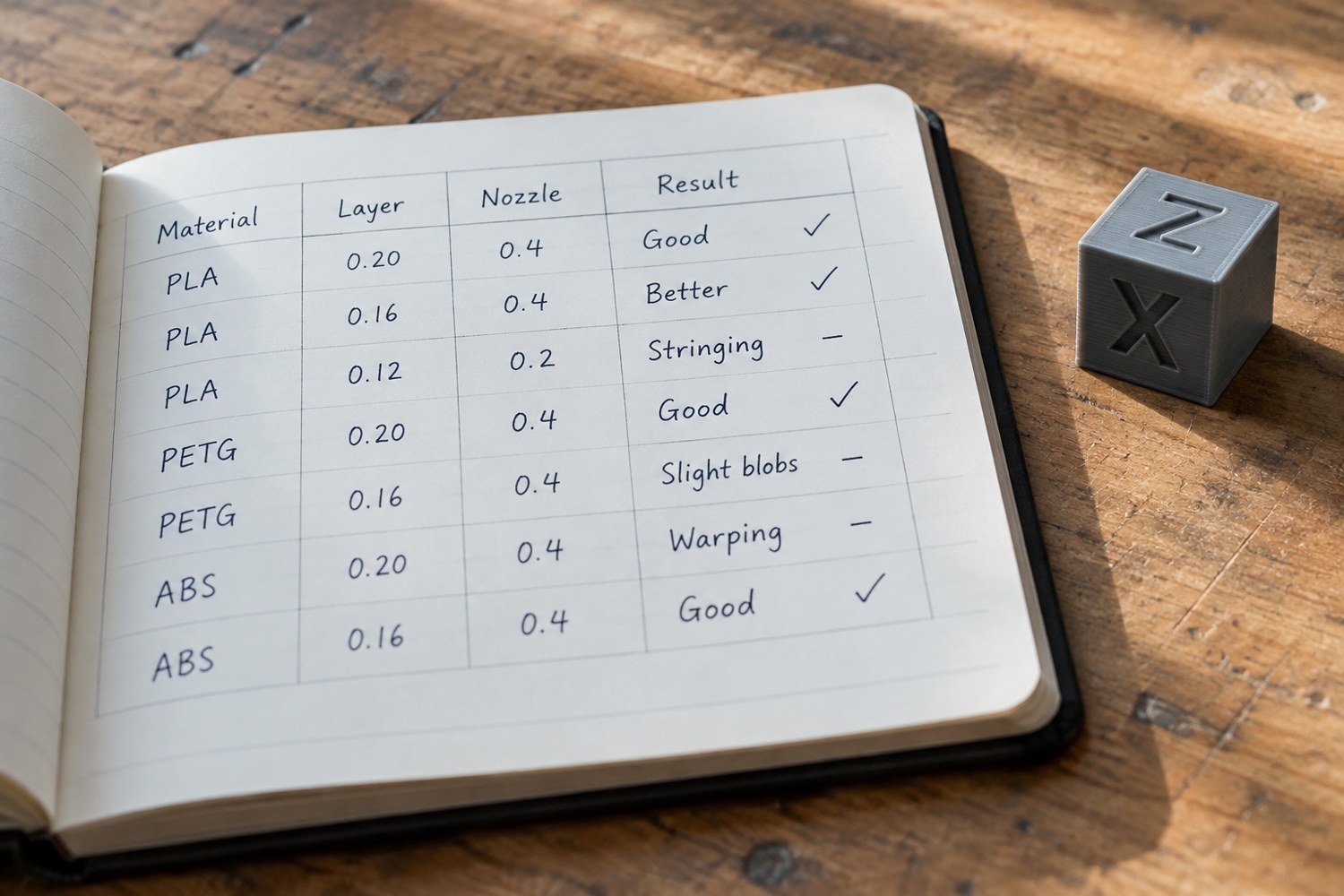
Read articleRecord enough context to reproduce a result without turning each print into a paperwork exercise.
Read articleIdentify separate shells before rearranging a file that may contain a complete assembly.
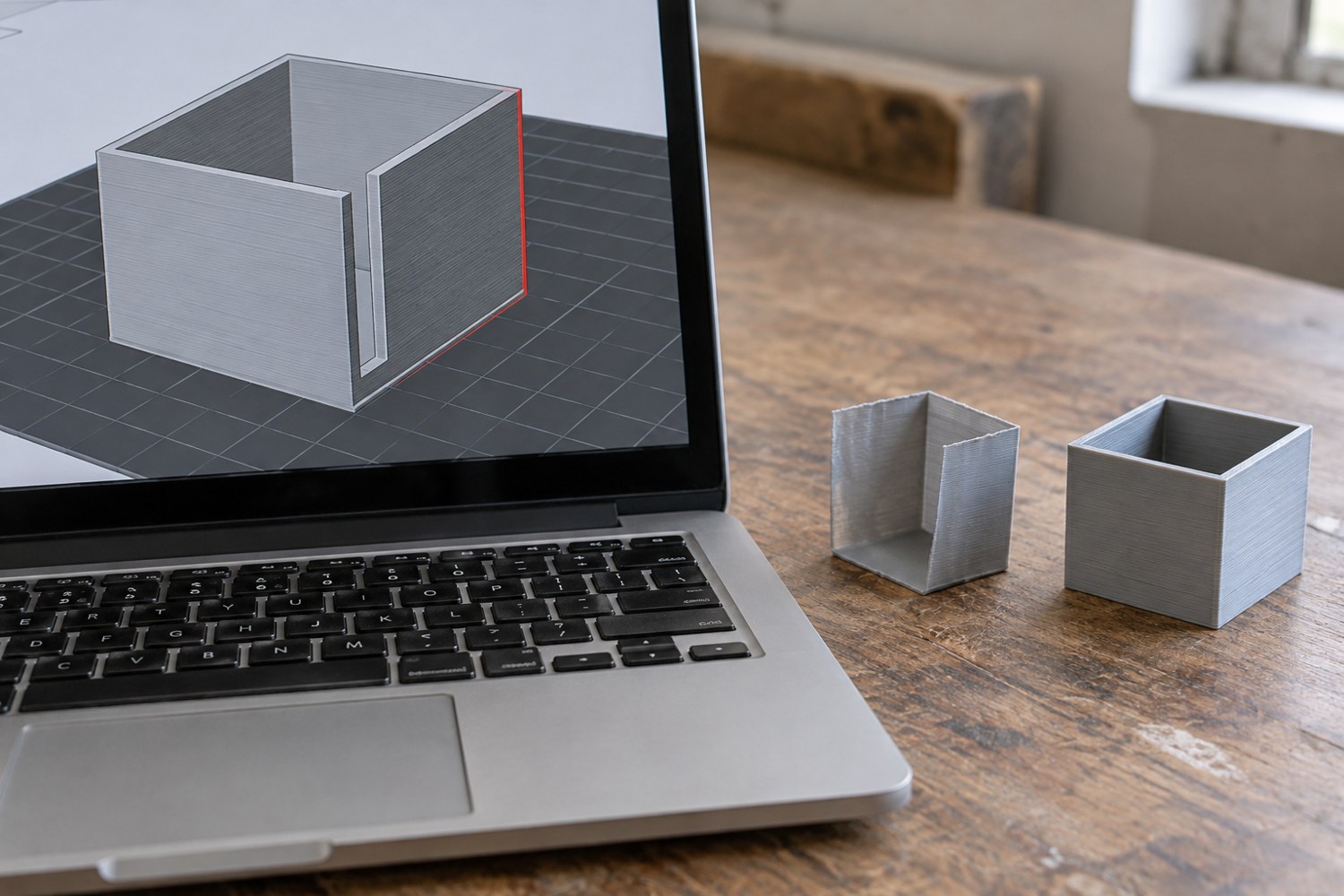
Read articleFind out whether a missing wall comes from scale, geometry or the way toolpaths are generated.
Read articleUse a planned layer change for raised lettering or bands of colour on a compatible printer.
Read articleCompare printing and assembly together before deciding how many pieces a model should have.
Read articleCompare build space, supported materials and ownership tasks alongside a headline speed figure.
Read articleInspect the documented configuration, service history and a representative print before considering a used machine.
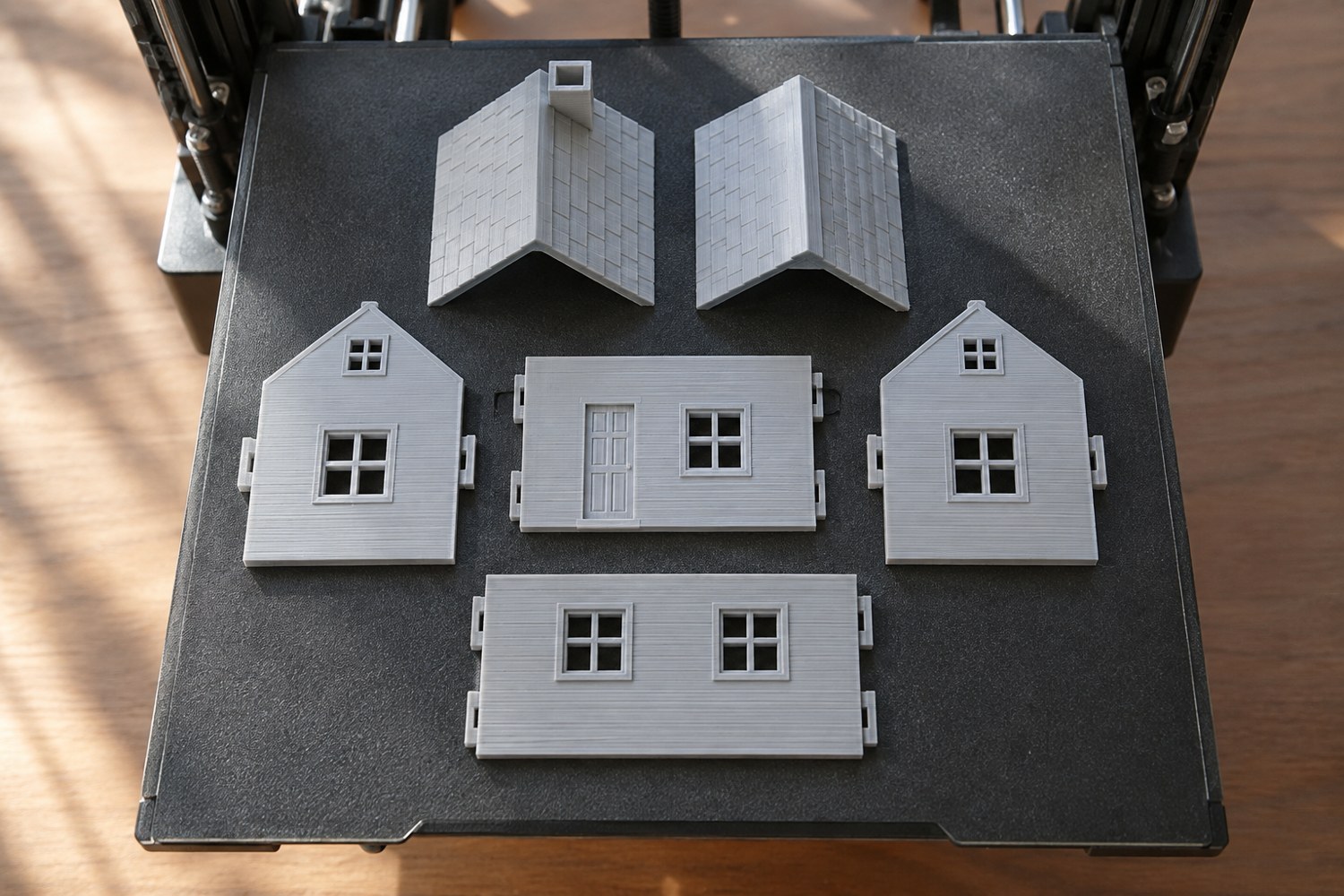
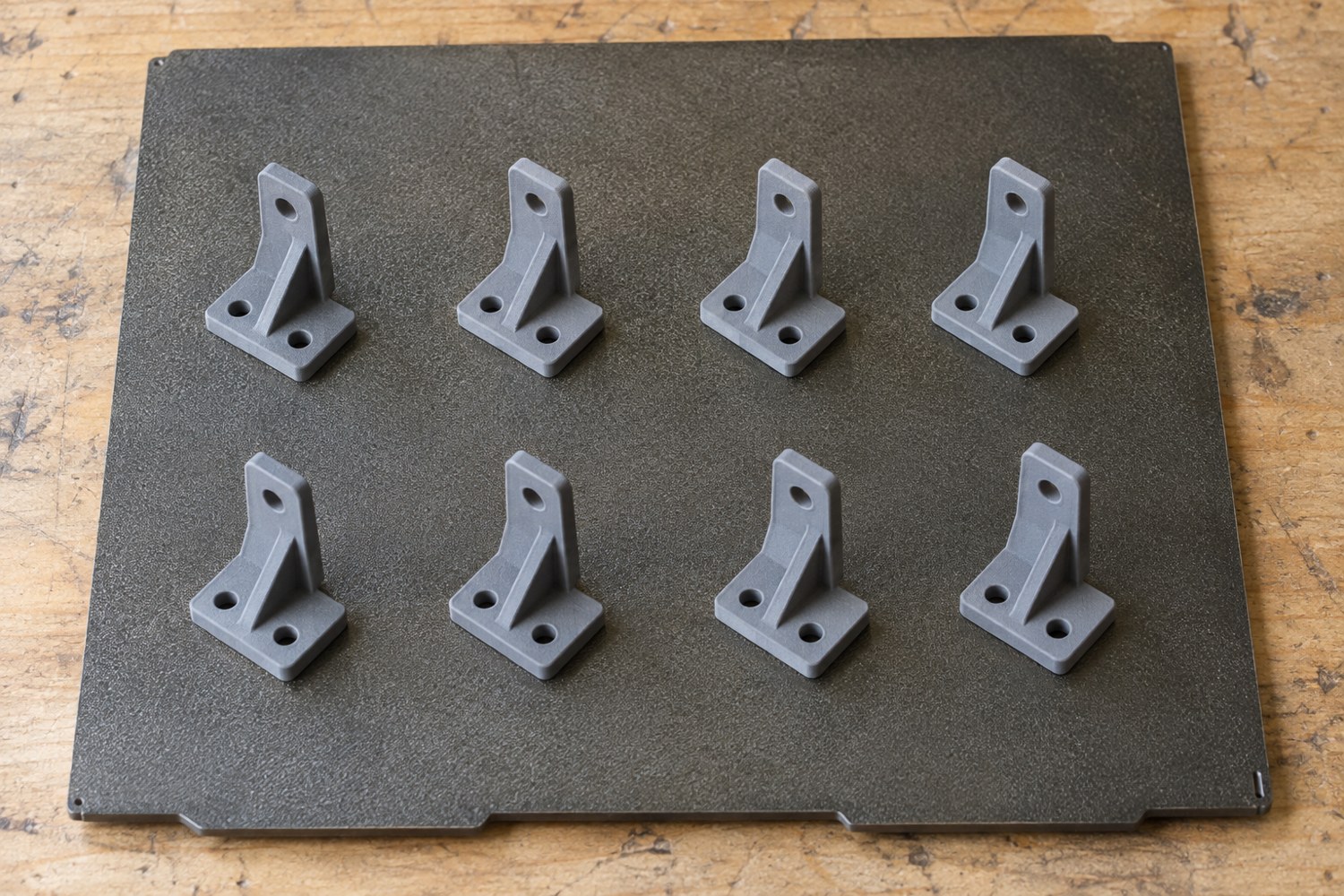
Read articleGroup small objects by their printing needs and leave space for the structures the slicer adds.
Read articleUse a stable baseline and a small set of questions to avoid endless, contradictory tuning.
Read articleChoose a process by the finished object's requirements and the complete workspace it needs.
Read articleNo articles match. Try a shorter phrase or another subject.