Check a build plate before blaming the filament
Check surface identity, seating and preparation before replacing a spool that may be working normally.
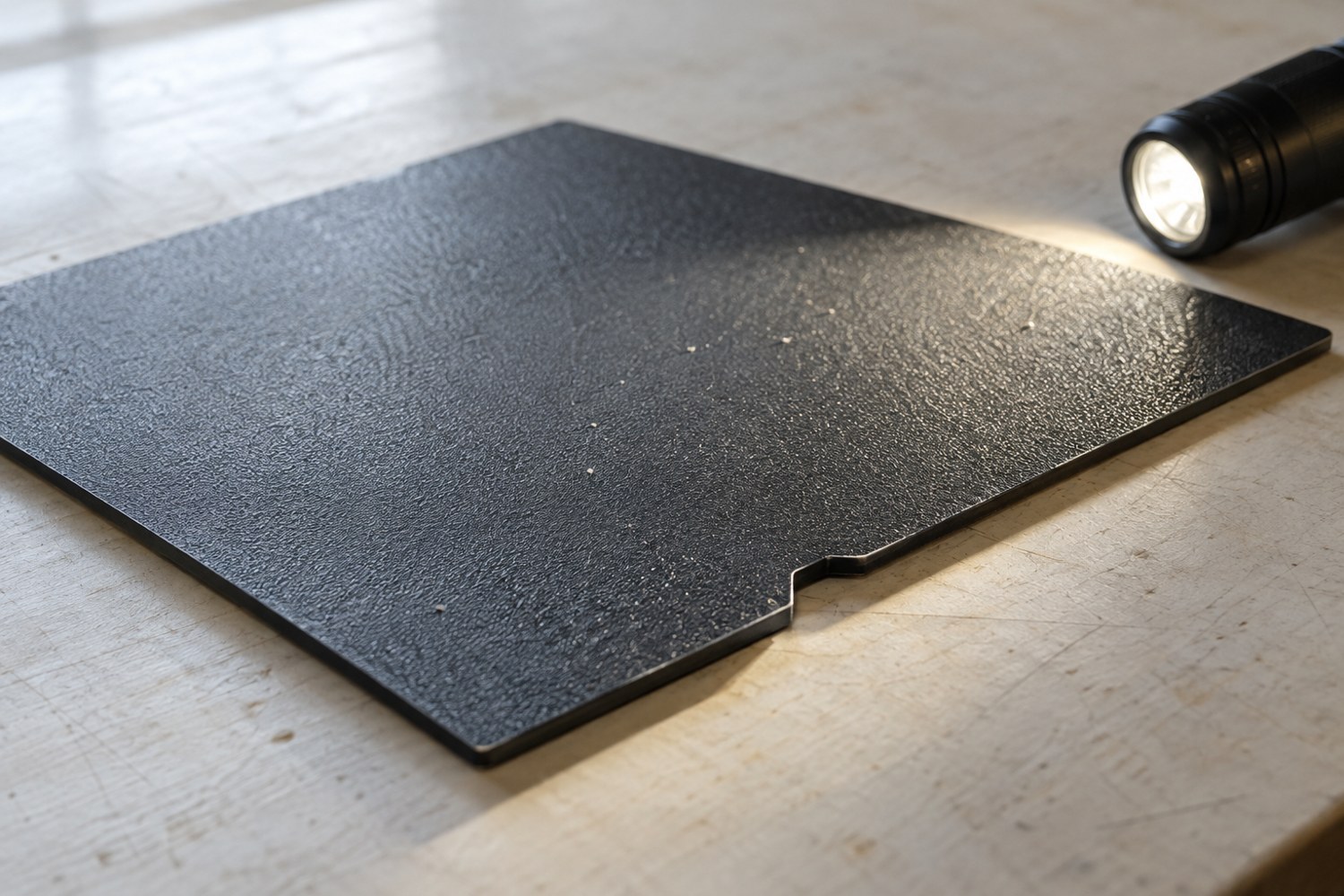
When a print lifts from the bed, changing filament is tempting because the spool is visible and easy to blame. First establish whether the build surface is the one the profile expects. A smooth sheet, a textured sheet and a specialised material sheet can require different preparation even when they fit the same printer. Use the exact surface name rather than describing all of them as a metal plate.
With the machine in the safe state specified by its manual, inspect the plate for old fragments, residue and damage. Check underneath a removable sheet as well as on top: a trapped piece can prevent it from seating as intended. Do not put fingers or tools into a moving or hot machine to conduct this inspection.
Find the manufacturer's instructions for the surface and material combination. Prusa's smooth PEI guidance, for example, warns that some materials can adhere too strongly and require a separation layer. This illustrates why “make it stick harder” is not always the right objective. Do not transfer a cleaning chemical or scraping method from a different coating without checking compatibility.
After preparation, handle the plate by its edges and keep the working face free of avoidable fingerprints. Confirm that the selected profile corresponds to the material actually loaded. If the printer stores different sheet or calibration settings, select the appropriate one using its documented procedure. A new plate can require more than simply clipping it into place.
Run a small known print and watch the first layer from a safe distance. Note whether the issue is local to one area, follows a particular model feature, or affects the entire footprint. Photograph the result before removing it. These observations help separate a preparation problem from geometry, calibration or material behaviour.
Only then compare another spool under the same controlled setup. If you change the surface treatment and filament simultaneously, a successful result cannot identify which mattered. Keep the first spool labelled with the actual symptom rather than marking it defective. A record such as “corner lifted on textured sheet, not yet retested” leaves room for a fair diagnosis and avoids discarding usable material on the basis of one ambiguous print.
Another detail to explore
Choose a first 3D printer around the objects you want to make
Start with three objects, their dimensions and the space available for making them. Those decisions narrow the printer search before speed claims do.
Read article
Read a sliced preview before starting a print
Read the toolpaths, first layer and delicate features before a file reaches the printer.
Read article