Use a wash to reveal recesses without flooding a model
Place a wash where the model needs separation, then remove excess before it collects into distracting pools.
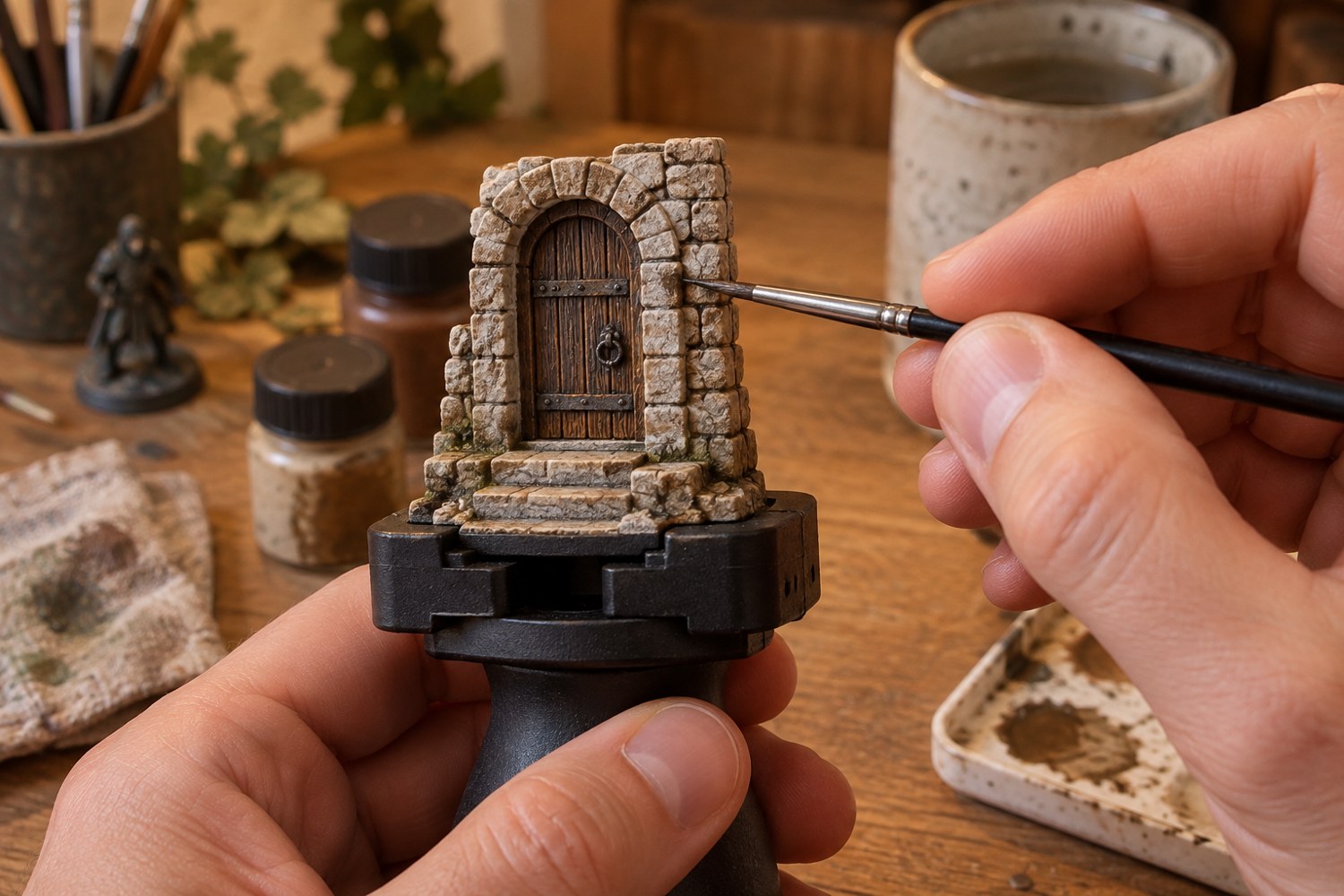
A wash can emphasise recesses, but coating every surface heavily can darken the whole model and obscure its colour relationships. Decide what needs definition: mortar lines, panel joins, folds or the underside of a ledge. Work on one small area first and judge the result after it has reached the product's stated drying condition.
Use a wash compatible with the underlying paint and follow the manufacturer's thinning guidance if thinning is appropriate. Do not assume that every shade product behaves like diluted ordinary paint. Make a sample using the same base coat, because surface finish affects how the liquid moves.
Give the liquid a place to go
Support the model at an angle that lets you reach the target recess without balancing it in your hand. Load a controlled amount on the brush and place it near the line you want to define. Watch the adjacent flat areas. If a large bead forms, wick away the excess with a clean brush suitable for that paint system before it dries in place.
Avoid repeatedly brushing an area that has begun to set. It can disturb the surface and leave uneven marks. Finish a manageable section, then let it dry according to the product instructions before deciding whether it needs another application.
On a stone wall, concentrate on selected joints rather than making every gap equally dark. On a small building, the shadow under a roof may need more definition than the entire front wall. This hierarchy helps the model remain readable at normal viewing distance.
If the result is too dark, assess it before adding a bright dry-brush over everything. You may only need to restore a few raised surfaces with the base colour. Keep the recess definition where it is useful and avoid turning the repair into a new uniform effect.
Photograph the model beside an untreated sample if you are developing a repeatable terrain palette. Record the wash product and whether it was applied selectively or across a larger area. A useful wash supports the form already present. When the viewer notices a tide mark before the stonework or panel line, reduce the quantity or change the placement on the next test rather than simply reaching for a darker colour.
Another detail to explore
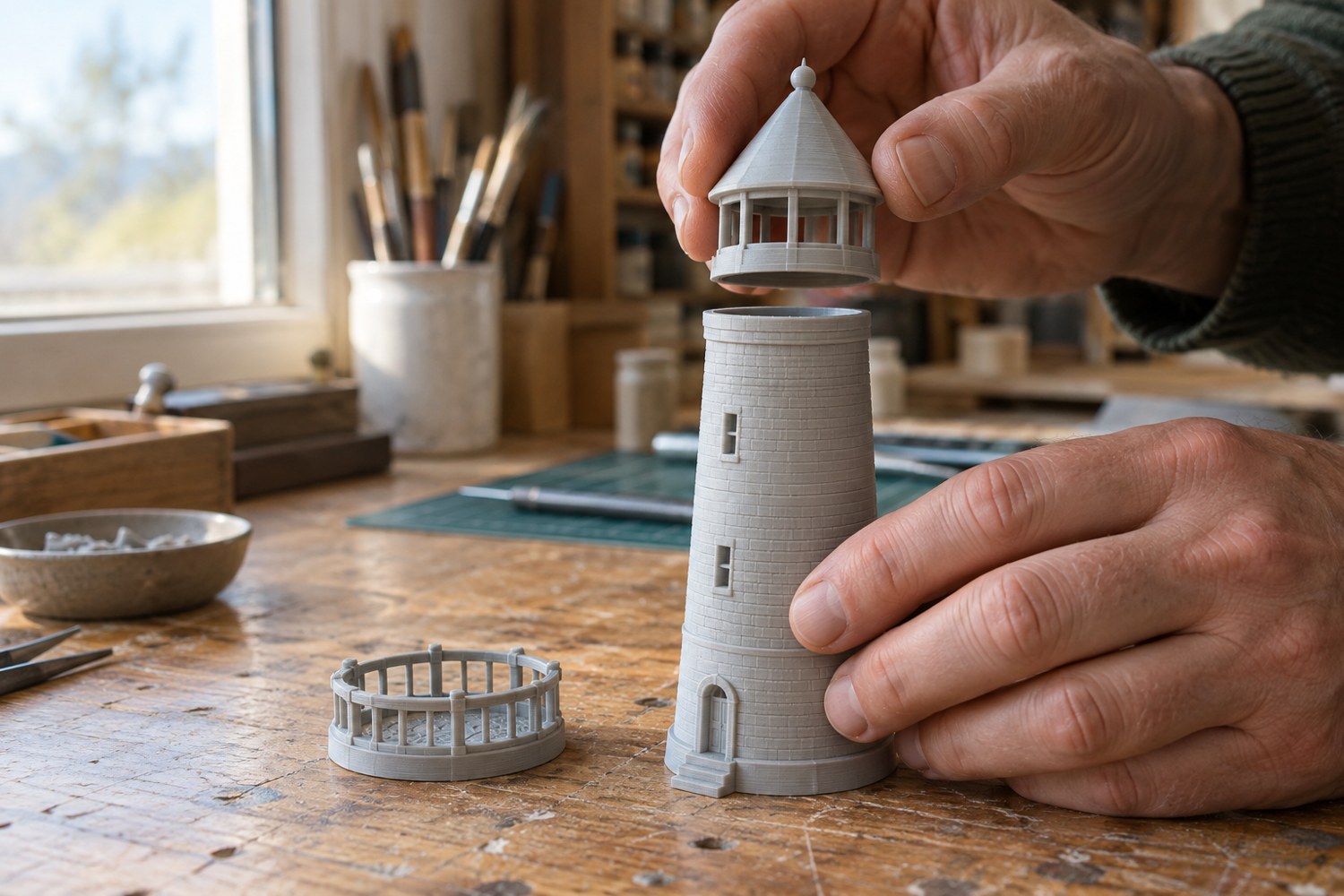
Dry-fit a printed model before reaching for glue
Check alignment, access and assembly order with temporary placement before an adhesive makes the decision permanent.
Read article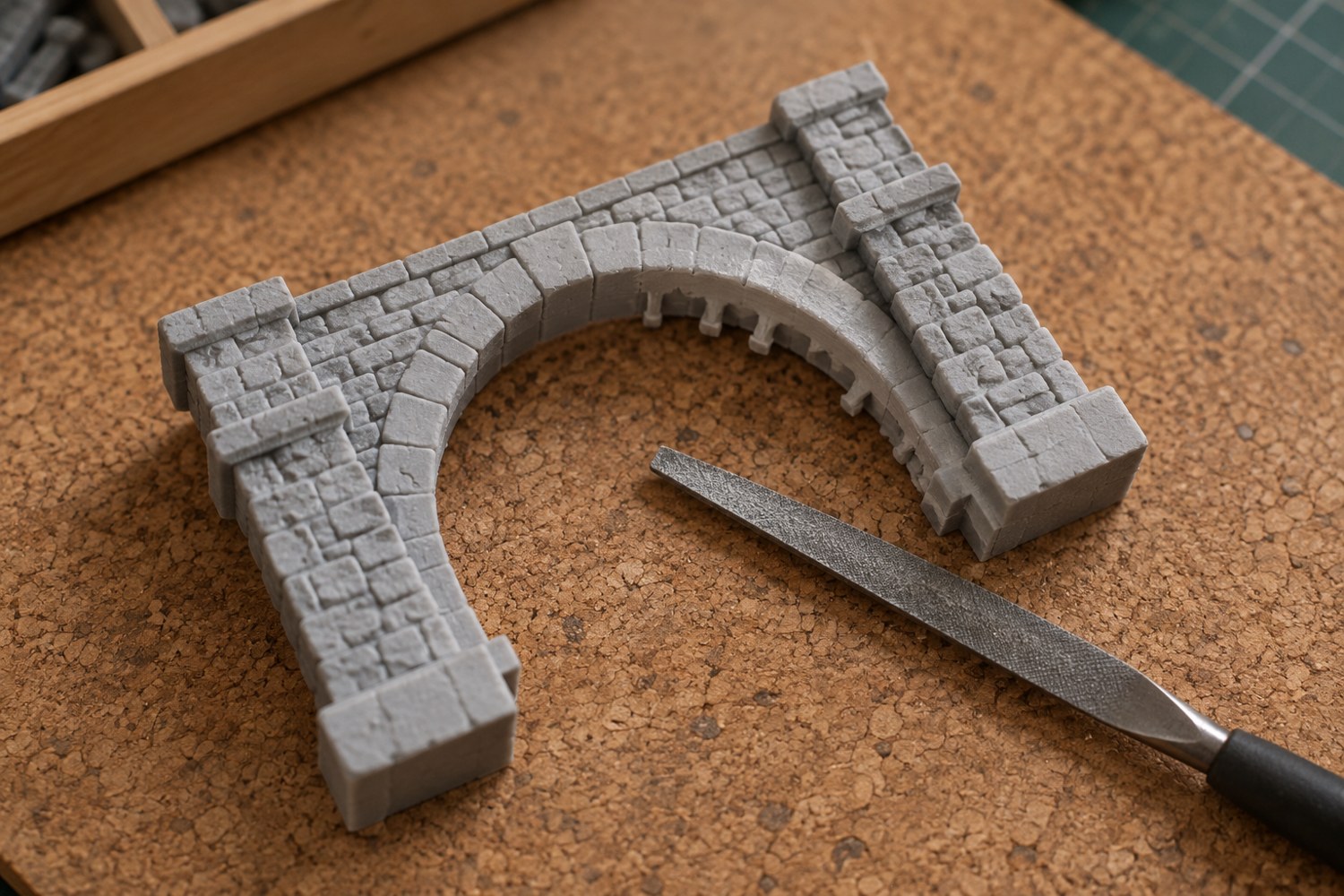
Remove support marks without flattening the model
Identify each support scar and protect the surrounding shape before removing material from a finished print.
Read article