Use a colour study before painting a landscape
Reduce a landscape to a few colour masses so you can test contrast and mood before painting the detailed model.

A colour study is a small rehearsal for the relationships in a landscape, not a miniature painting competition. Use a simple drawing or a photograph of the unpainted base. Divide it into the largest areas: land, water, buildings, vegetation and background. Ignore individual stones, windows and leaves for now.
Choose one overall lighting impression. A cool overcast harbour and a warm dry hillside will organise colours differently. You do not need a large paint collection to test that impression. Mix or select a few representative colours and keep a note of what each patch is meant to describe.
Paint two alternatives on separate scraps. In one, make the main building lighter than its surroundings; in the other, try a darker building against lighter ground. Compare them at thumbnail size. This shows whether the focal point depends on tiny details that will disappear at normal viewing distance.
Check value before adding more hues
Photograph the study in monochrome or temporarily view a desaturated version. If all the major areas become the same grey, adding another bright colour may not solve the underlying problem. Adjust one large light-dark relationship and compare again.
Limit the strongest contrast to the area you want noticed first. A bright strip of shoreline can accidentally become more prominent than the lighthouse. Soften or interrupt that strip in the study before repeating it around the entire model. Quiet areas are useful because they give the eye somewhere to rest.
Test the chosen colours on the actual surface materials as well. A colour on white paper can look different over a dark primer or textured cork. Keep that material test separate from the composition study: one checks paint behaviour, while the other checks the arrangement of colour across the scene.
Save the successful study beside the workbench. Use it to judge the first broad coats and avoid drifting towards a new colour scheme with each small object. Changes are allowed, but compare them against the whole scene. If a new roof colour improves the focal point, update the study rather than treating the original as an unchangeable rule. The study has done its job when the detailed painting follows a clear overall relationship without requiring you to repaint the entire landscape.
Another detail to explore
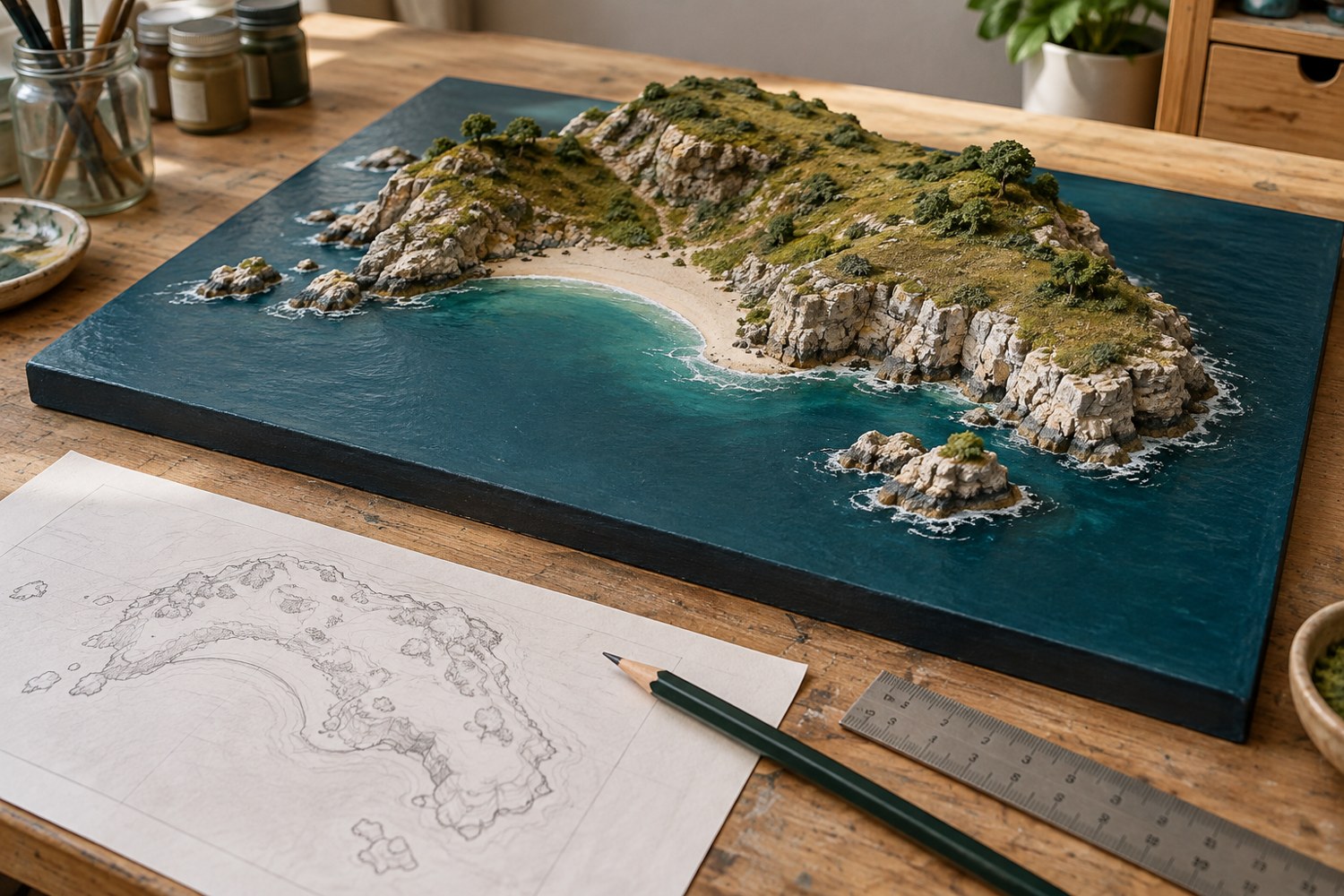
Plan an island diorama before building the coastline
Turn an island idea into a buildable composition by deciding the viewing angle, scale, shoreline and assembly order on paper first.
Read article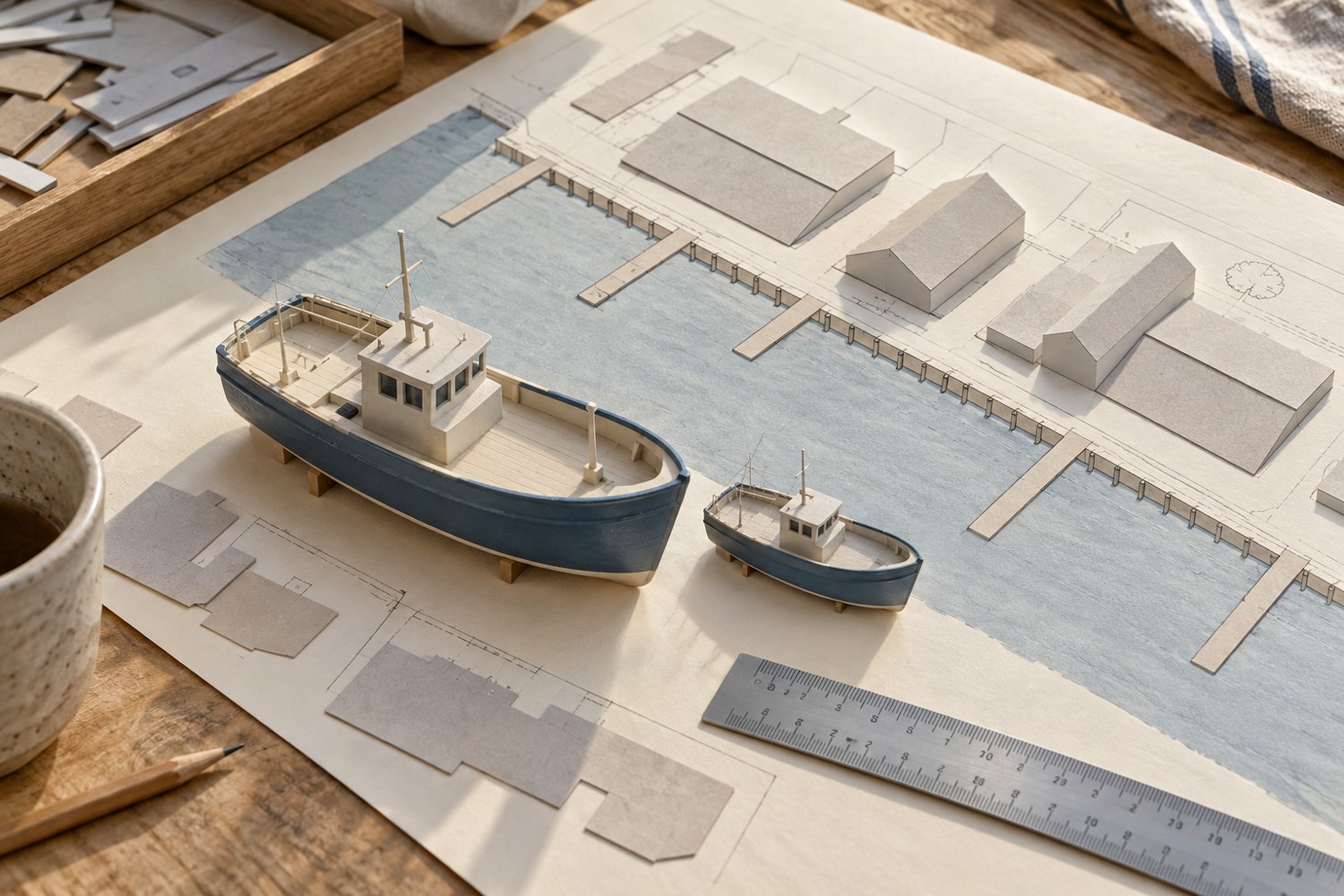
Choose a scale for a miniature harbour
Use the largest boat and the available footprint to choose a harbour scale before buying buildings and fittings.
Read article