Make trees fit the scale of a scene
Judge miniature trees beside buildings and paths, then use their shape and canopy spread to organise the scene.
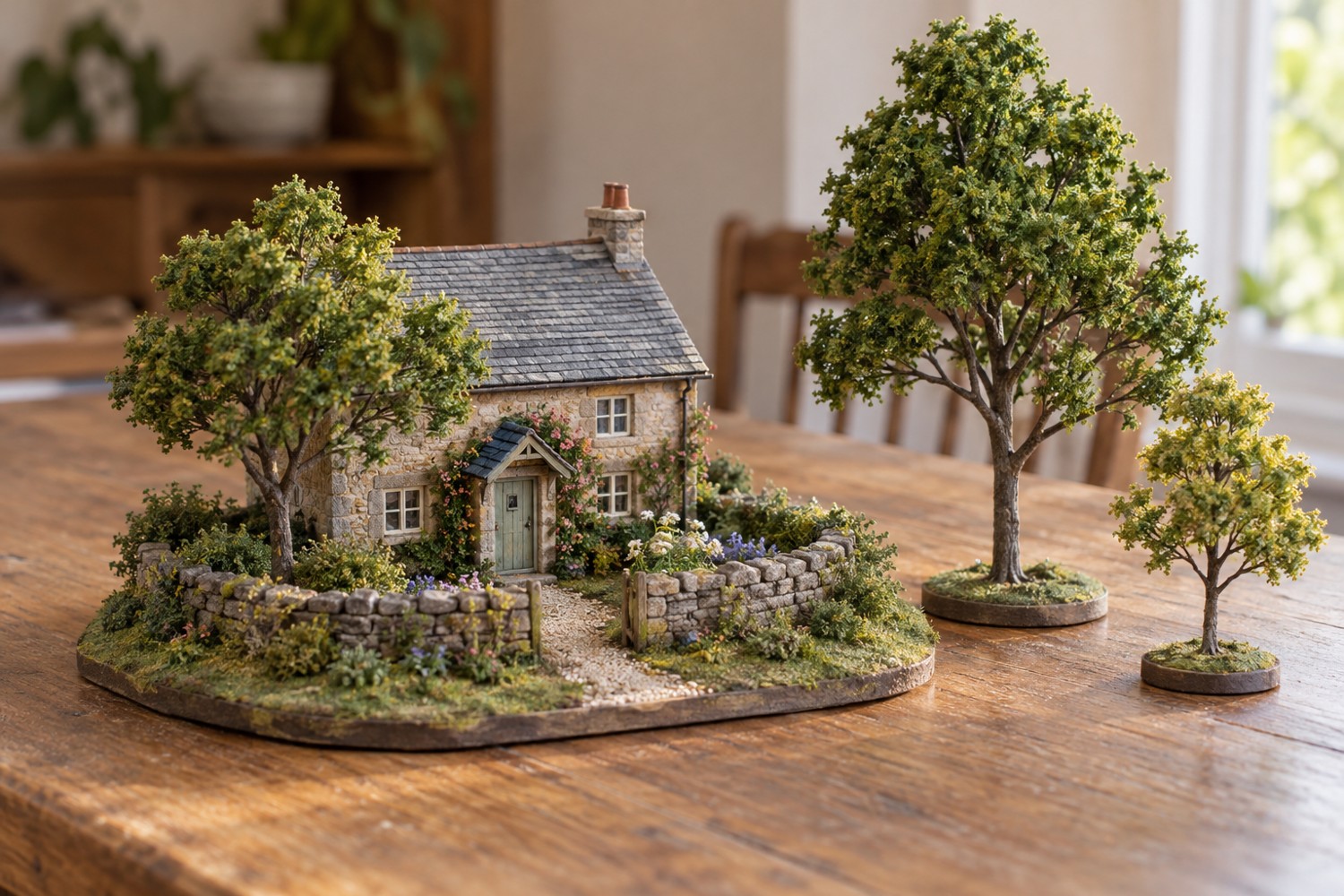
A tree sold for a particular scale may represent a young tree, a mature tree or a deliberately compressed scenic shape. Height alone is not enough to determine whether it belongs in your scene. Compare the trunk, canopy width and branch pattern with the buildings and open space around it.
Choose the role of each tree before selecting its size. One could frame the foreground, another could hide the junction with a backdrop, and a small group could suggest woodland continuing beyond the base. Giving every tree a job prevents the common habit of filling every remaining gap with foliage.
Measure a known object in the scene, such as a doorway. Use that as a visual reference while testing tree heights. If you want to model a particular real tree, use its intended full-size height and the model scale to calculate the miniature height. Treat the calculation as a starting point for composition, not proof that every tree in the same scale must be identical.
Stand temporary paper silhouettes where the trees will go. Look for branches that hide the main subject or merge with a roofline. A trunk may fit a narrow space while its canopy blocks a path or makes a building impossible to remove. Check the space above and around it with the actual structure in place.
Vary a group through spacing and slight differences in height. Avoid placing three trees in a perfectly regular row unless the scene calls for a planted avenue. Keep enough negative space between selected canopies for the group to remain readable. Dense foliage everywhere can flatten the landscape into one continuous mass.
Decide which trees need to be removable for storage. Provide a stable locating point below the scenic surface and a safe way to handle the trunk or base. Do not depend on squeezing foliage into a tight box to make a tall tree fit.
Photograph the arrangement at normal viewing distance. If the trees look like oversized shrubs, consider whether the trunk is hidden or the canopy starts too close to the ground. If they overpower the village, remove one before cutting all of them shorter. The right relationship may come from fewer trees and better placement rather than a different nominal scale.
Another detail to explore
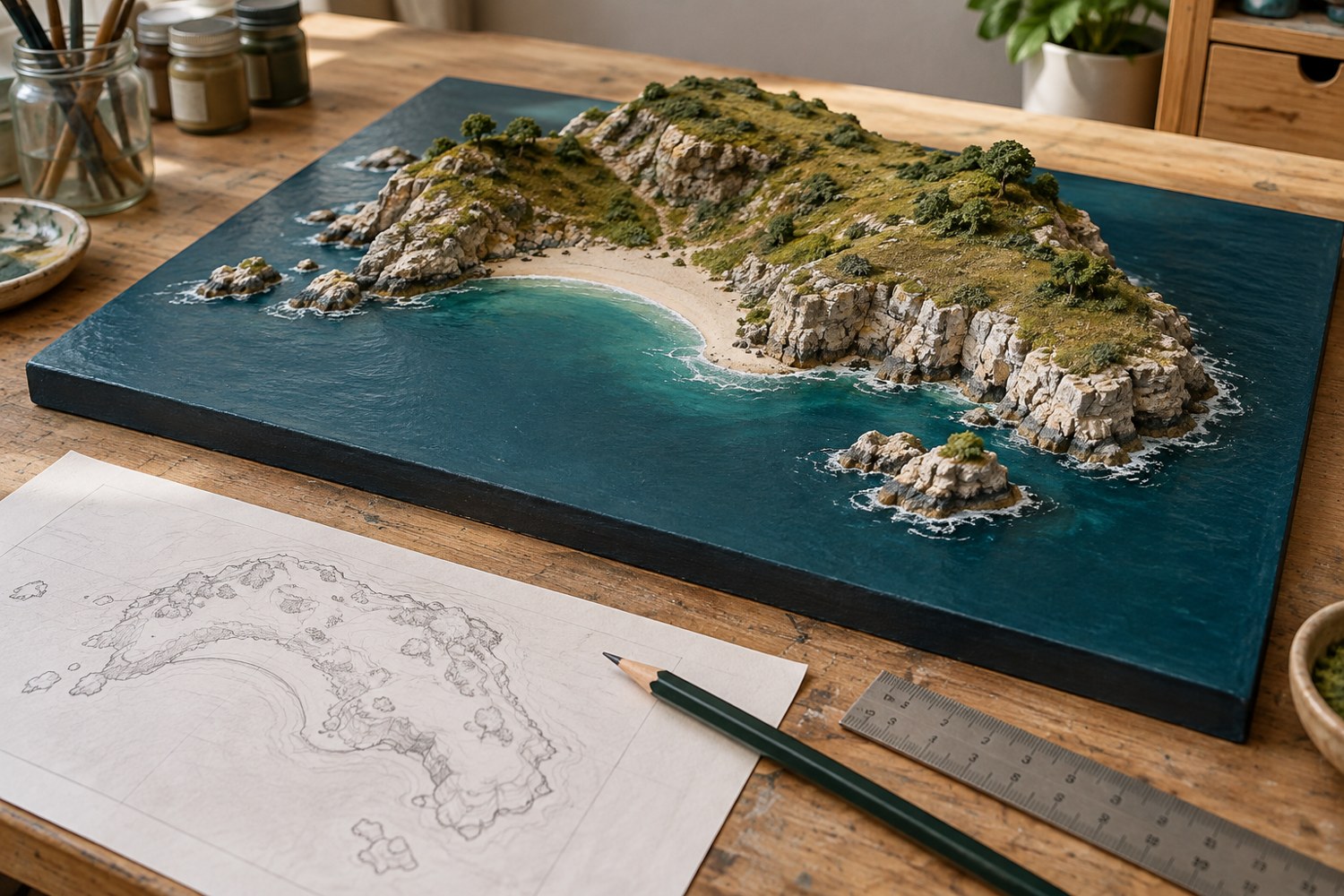
Plan an island diorama before building the coastline
Turn an island idea into a buildable composition by deciding the viewing angle, scale, shoreline and assembly order on paper first.
Read article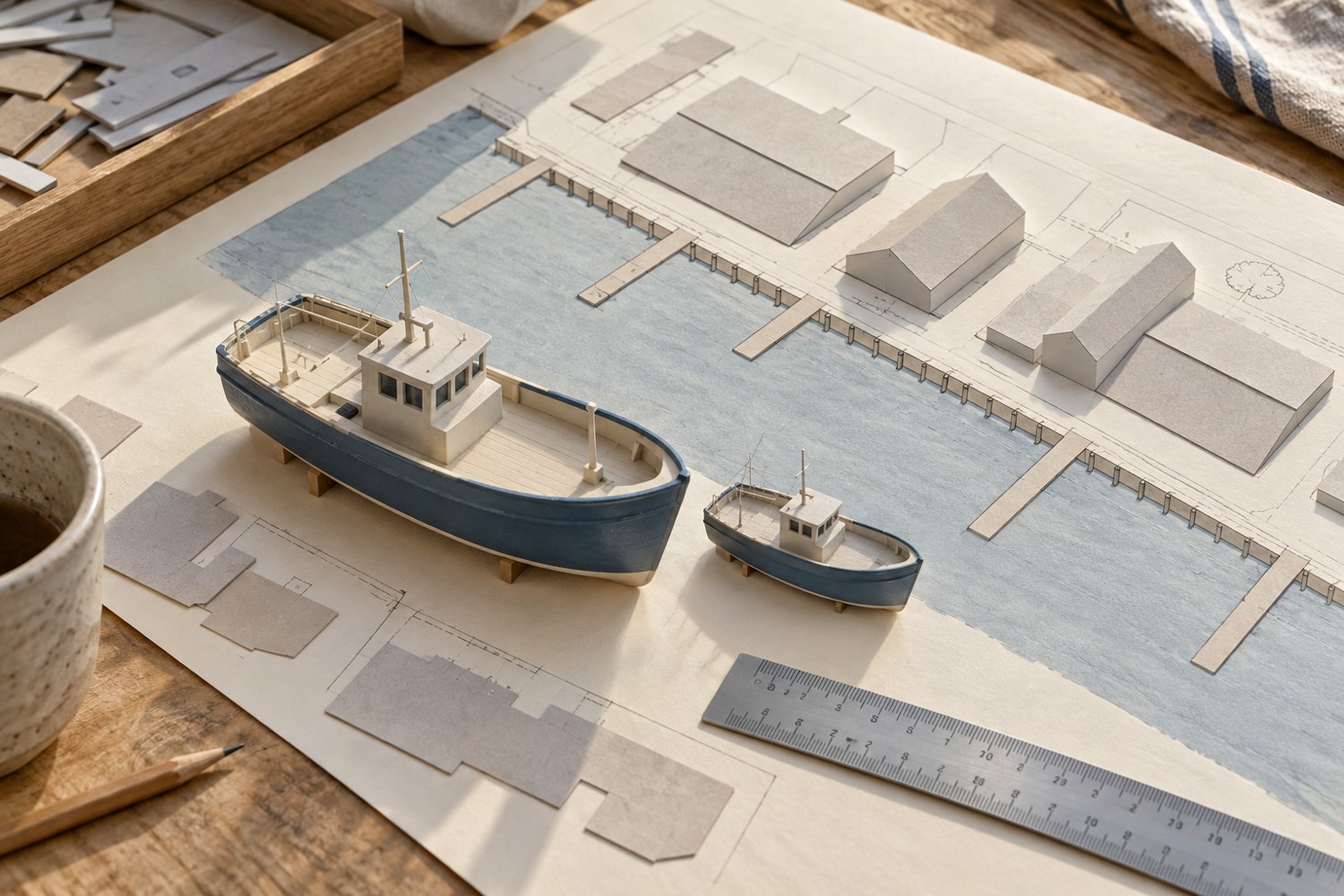
Choose a scale for a miniature harbour
Use the largest boat and the available footprint to choose a harbour scale before buying buildings and fittings.
Read article