Make a scenic base that leaves room for the miniature
Reserve the miniature's footprint and viewing space before building rocks, vegetation or dramatic changes in height.
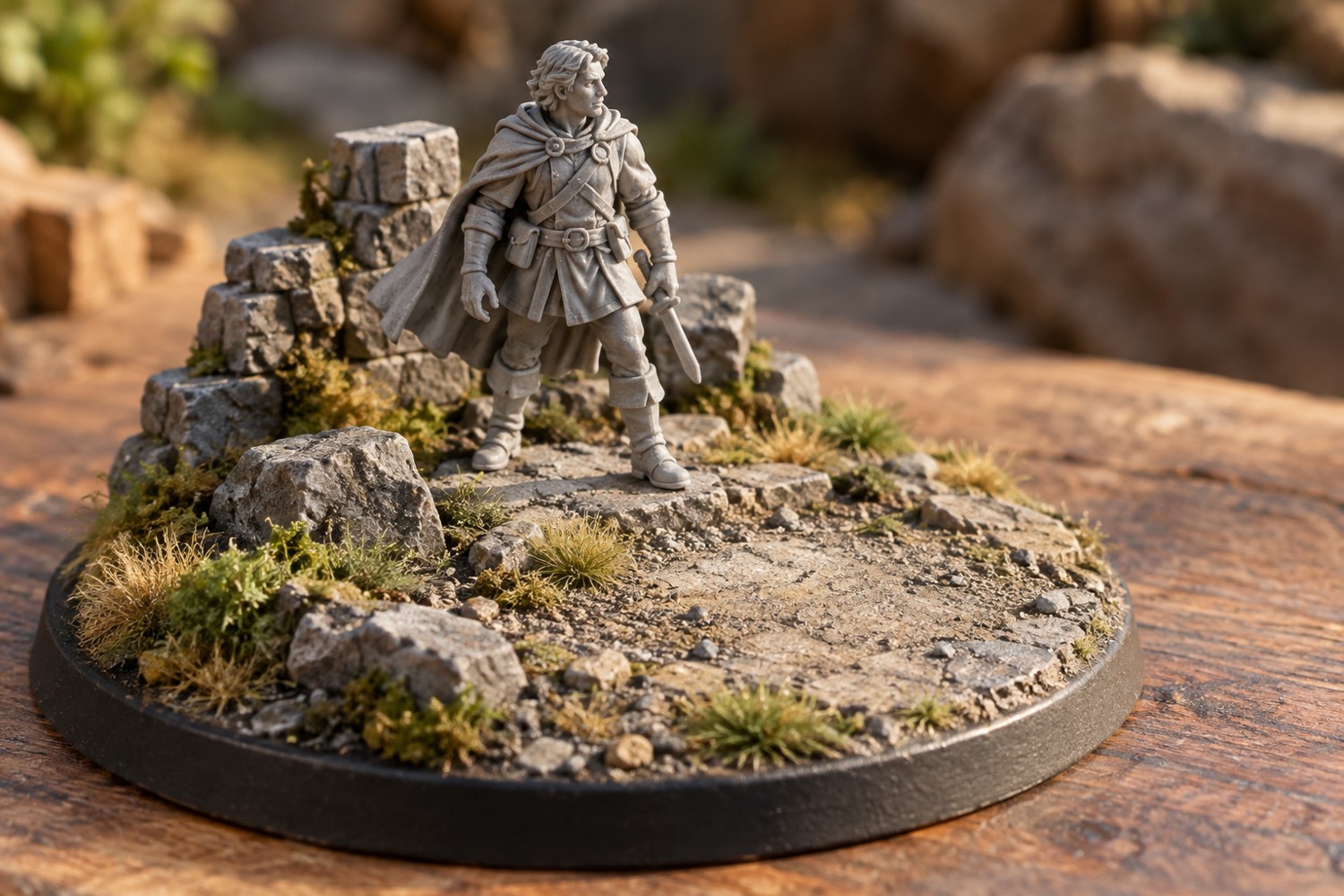
A scenic base exists to support its miniature. Trace the figure's contact points and overall footprint before adding terrain. Include projecting weapons, clothing or equipment in the viewing check, even if those parts do not touch the ground. A rock that clears the feet can still hide an important silhouette.
Decide where the figure will look or move. Leave some visual space in that direction. Placing the face or main gesture directly against the base edge can make the composition feel cramped. A small change in position may be more effective than adding height beneath the miniature.
Use temporary blocks to test the terrain. Put the figure on them and photograph the arrangement from the expected viewing angle. Check that the base does not make the feet look unsupported or force the pose onto an implausible slope. If the miniature has an integral base, decide how to incorporate it before applying surface texture.
Keep the focal area open
Place the strongest scenic detail where it helps explain the figure's setting. A broken wall, doorway or patch of shoreline can be enough. Avoid surrounding the miniature with objects of equal contrast and height. The viewer should not have to search through the base to find the subject.
Preserve clean attachment surfaces until the figure is ready to mount. Paint, loose flock and grit can interfere with a planned joint. Choose an attachment method compatible with the materials and expected handling, then test it on spare material where possible. Do not assume a decorative pin or thin scenic layer can carry the whole model.
For gaming use, check any required base shape and size against the rules you actually follow. Keep overhanging scenery modest enough for adjacent pieces to stand together. A display-only plinth can prioritise composition more freely, but still needs a stable resting surface.
Paint the base in relation to the figure. If both have similar tones, a quieter or contrasting area behind the legs can improve separation. Finish the rim cleanly after the textured work is complete. Lift the final piece by its base, and leave enough accessible edge to do that without touching the miniature. The best scenic detail is often the one that explains the setting while leaving the figure easy to see and handle.
Another detail to explore
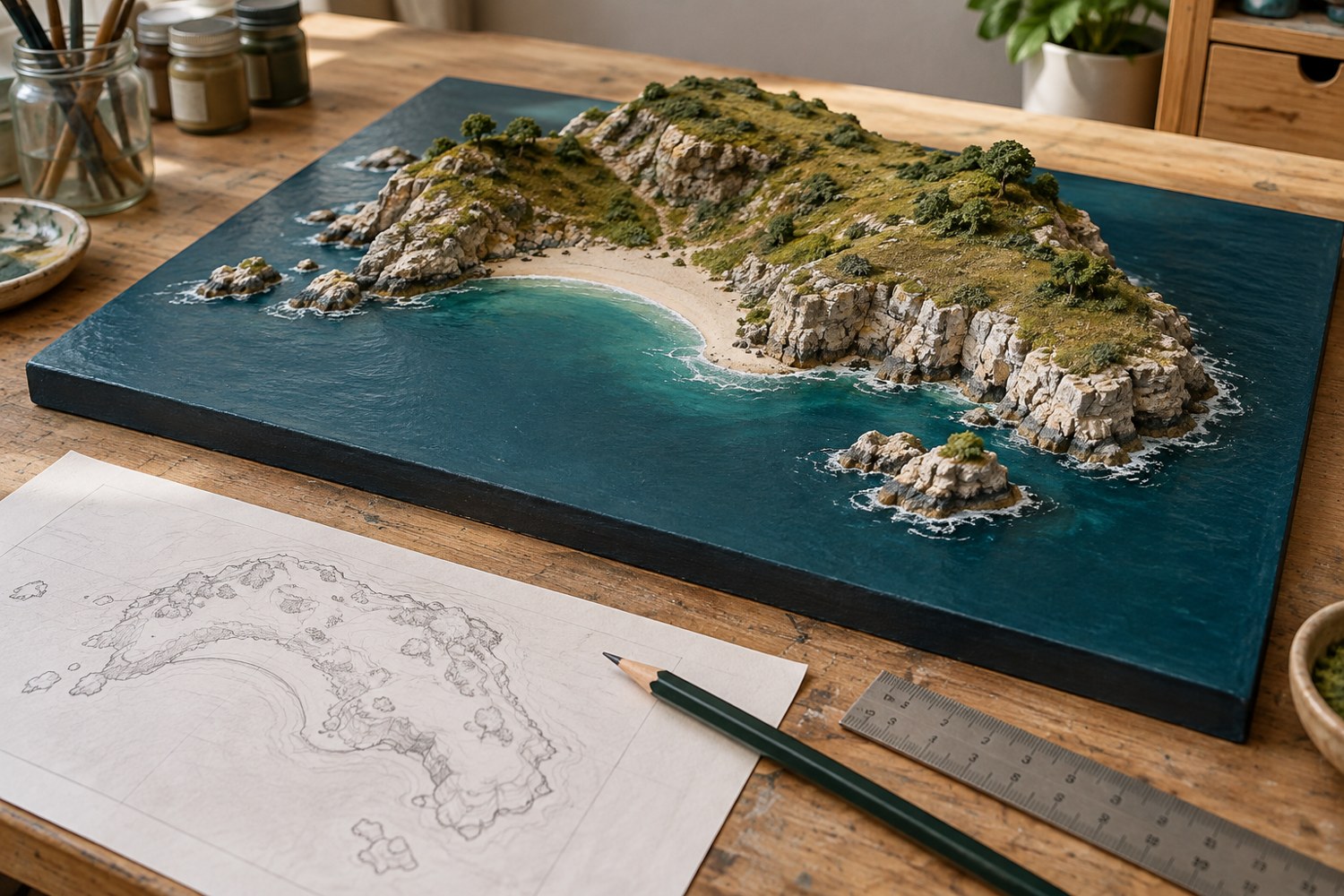
Plan an island diorama before building the coastline
Turn an island idea into a buildable composition by deciding the viewing angle, scale, shoreline and assembly order on paper first.
Read article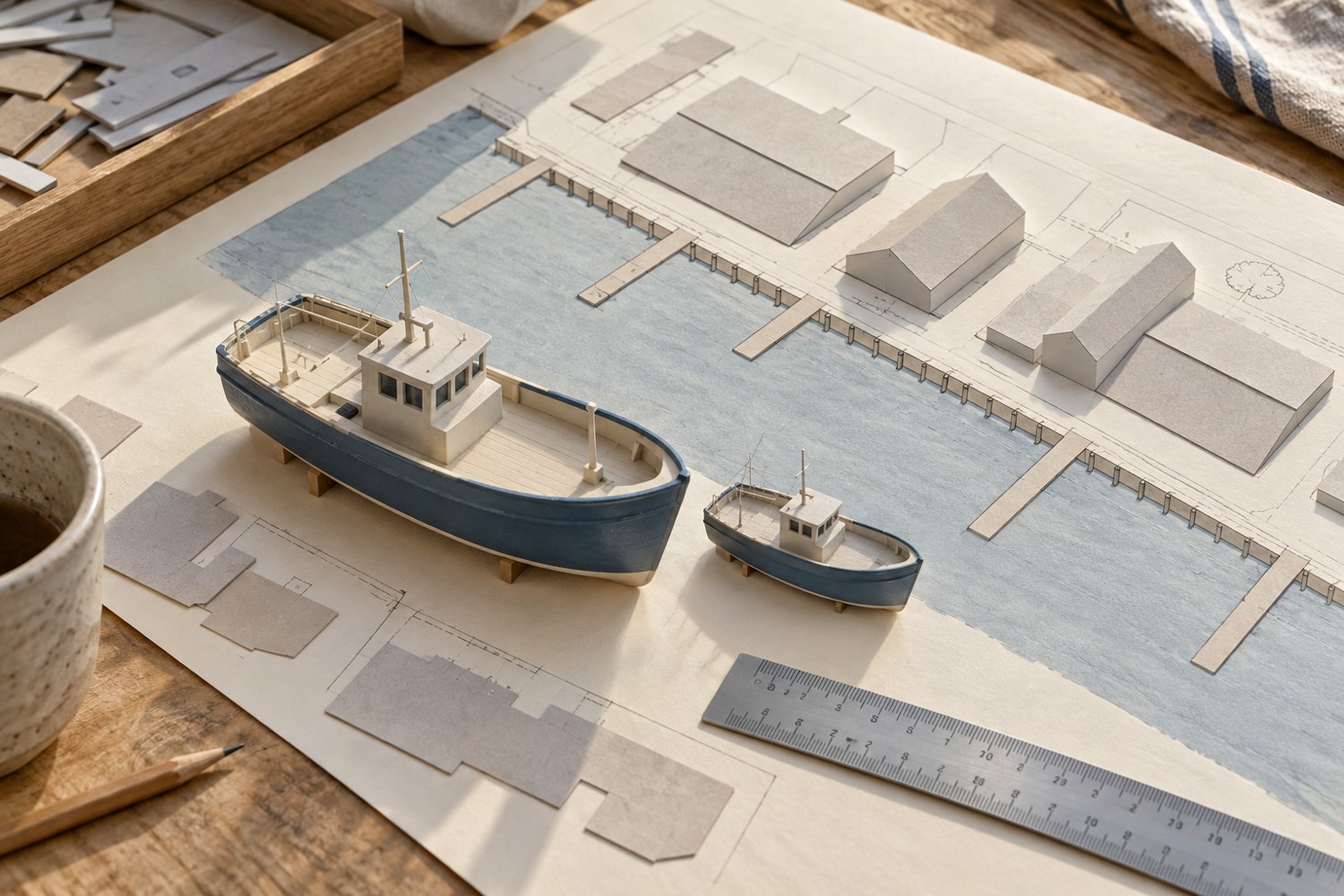
Choose a scale for a miniature harbour
Use the largest boat and the available footprint to choose a harbour scale before buying buildings and fittings.
Read article