Know when to stop adding surface detail
Judge each new detail by what it explains in the scene, and stop when additions compete with the subject or complicate handling.

A model can become less readable as it gains detail. The warning sign is not simply a large number of objects; it is that every surface asks for equal attention. Step away from the workbench and view the model at its intended distance. Identify the first three things you notice. Compare them with the subject you meant to emphasise.
If a cluster of tiny accessories draws attention away from the main structure, remove or quiet part of the cluster before adding anything else. A photograph at thumbnail size is useful because it reduces the influence of details that are visible only close up. The larger arrangement should still make sense.
Ask what a proposed addition explains. A ladder can show access to a roof, a path can connect a dock to a building, and a tool stack can suggest a work area. Another barrel placed in an empty corner may add only visual weight. Empty space can be a deliberate part of the composition.
Choose one unfinished purpose to resolve, such as defining the doorway or connecting the cliff to the ground. Complete that purpose and stop for a fresh look. This is more manageable than deciding that the entire model needs more detail. Keep possible additions on a separate tray rather than attaching them immediately.
Check the practical cost of each feature. Does it block a removable roof, create a fragile projection or remove the only safe grip? A detail that improves one photograph may make the model awkward to store or use. Test those movements before deciding it belongs permanently.
Compare the model under ordinary lighting as well as strong workbench light. Fine highlights and texture can become harsh when photographed, while some details disappear entirely at shelf distance. Adjust the large contrast relationships rather than compensating with more objects.
Take a dated set of photographs and leave the model alone for a while if the schedule allows. When you return, look for a specific unresolved issue. If you cannot name one, the scene may be ready. Keep the unused parts for another project. Finishing is the point at which the composition, function and intended viewing experience are resolved, not the moment every available surface has been occupied.
Another detail to explore
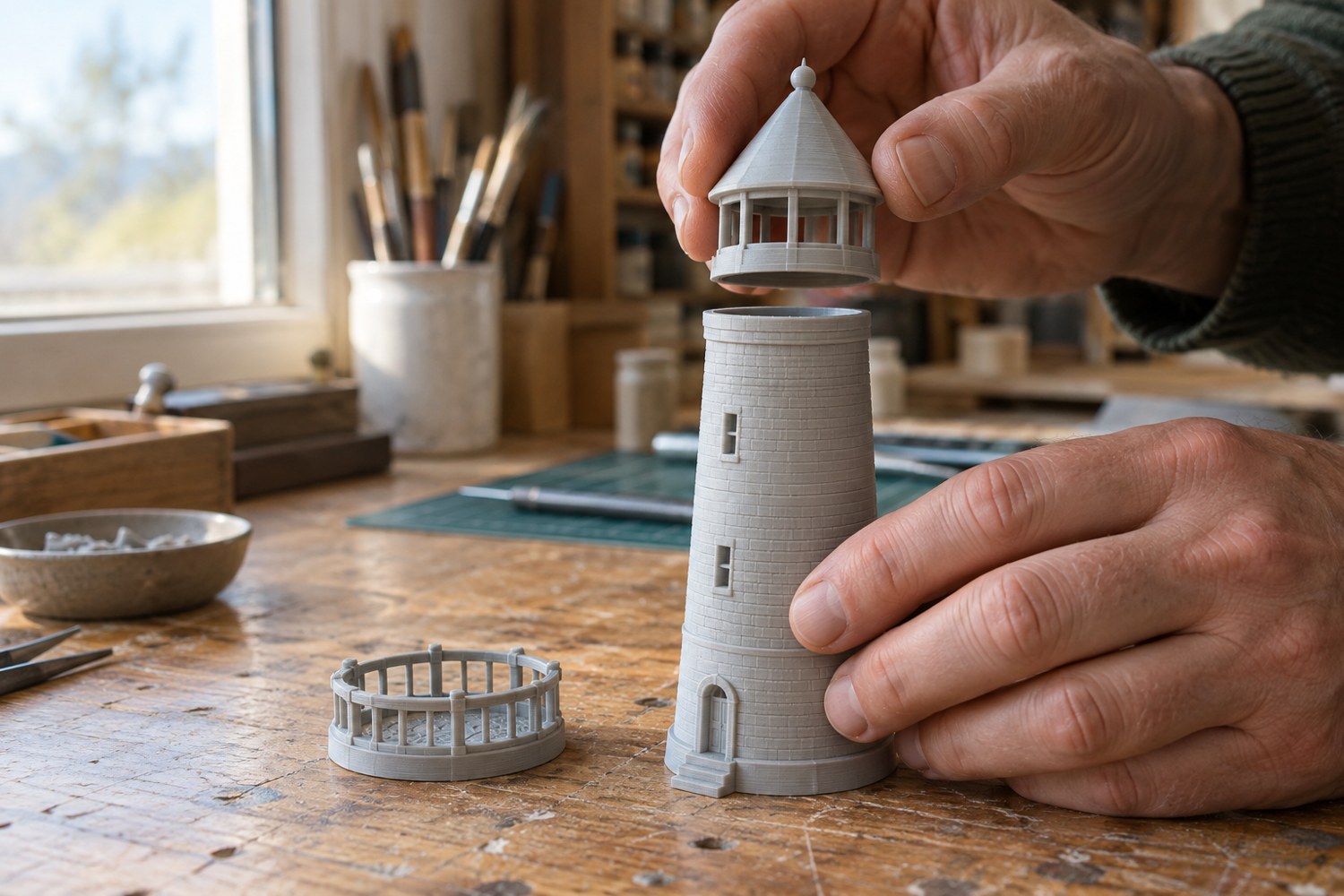
Dry-fit a printed model before reaching for glue
Check alignment, access and assembly order with temporary placement before an adhesive makes the decision permanent.
Read article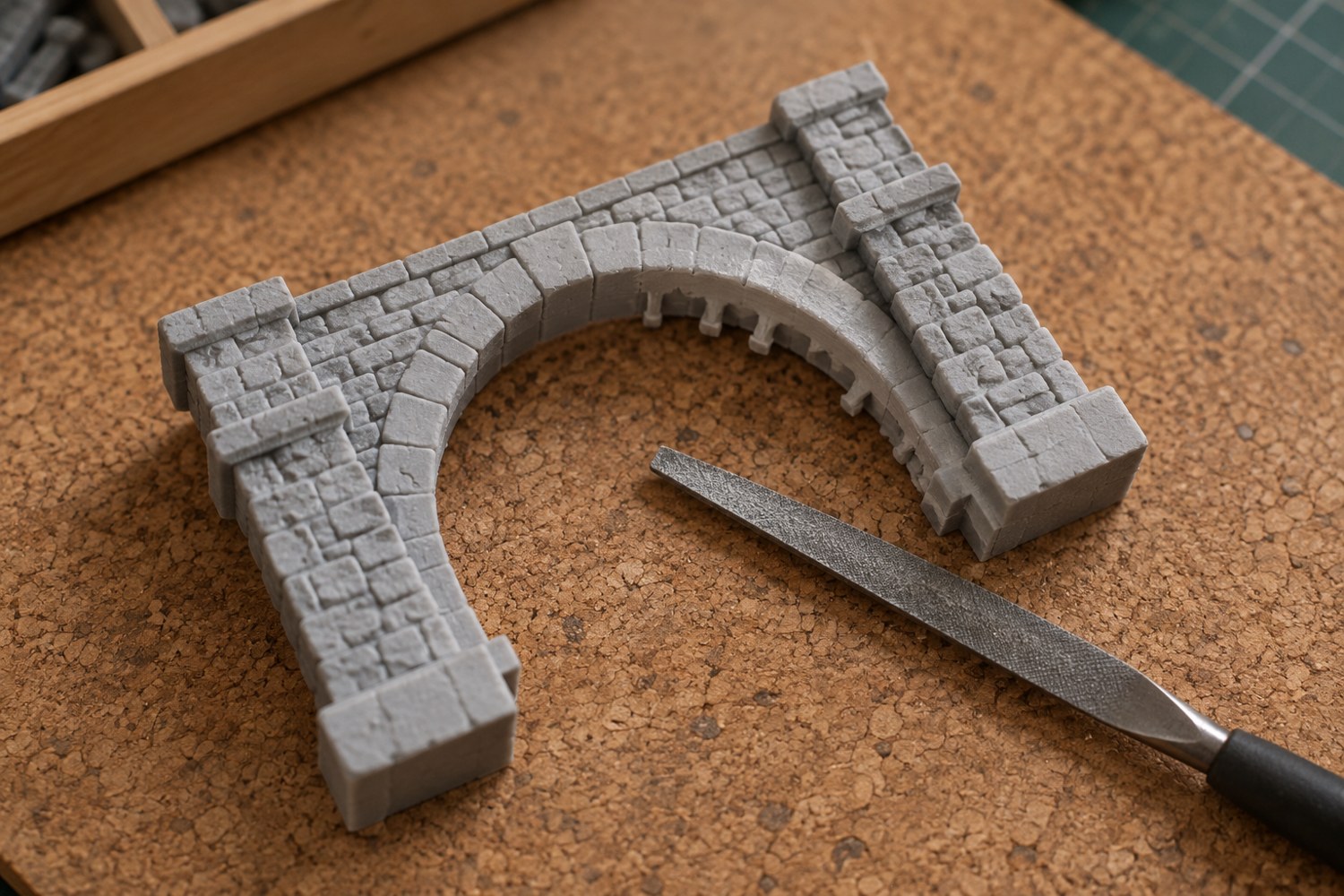
Remove support marks without flattening the model
Identify each support scar and protect the surrounding shape before removing material from a finished print.
Read article