Keep editable files alongside exported meshes
Keep the file that explains how a model was built, not only the mesh that can be printed today.
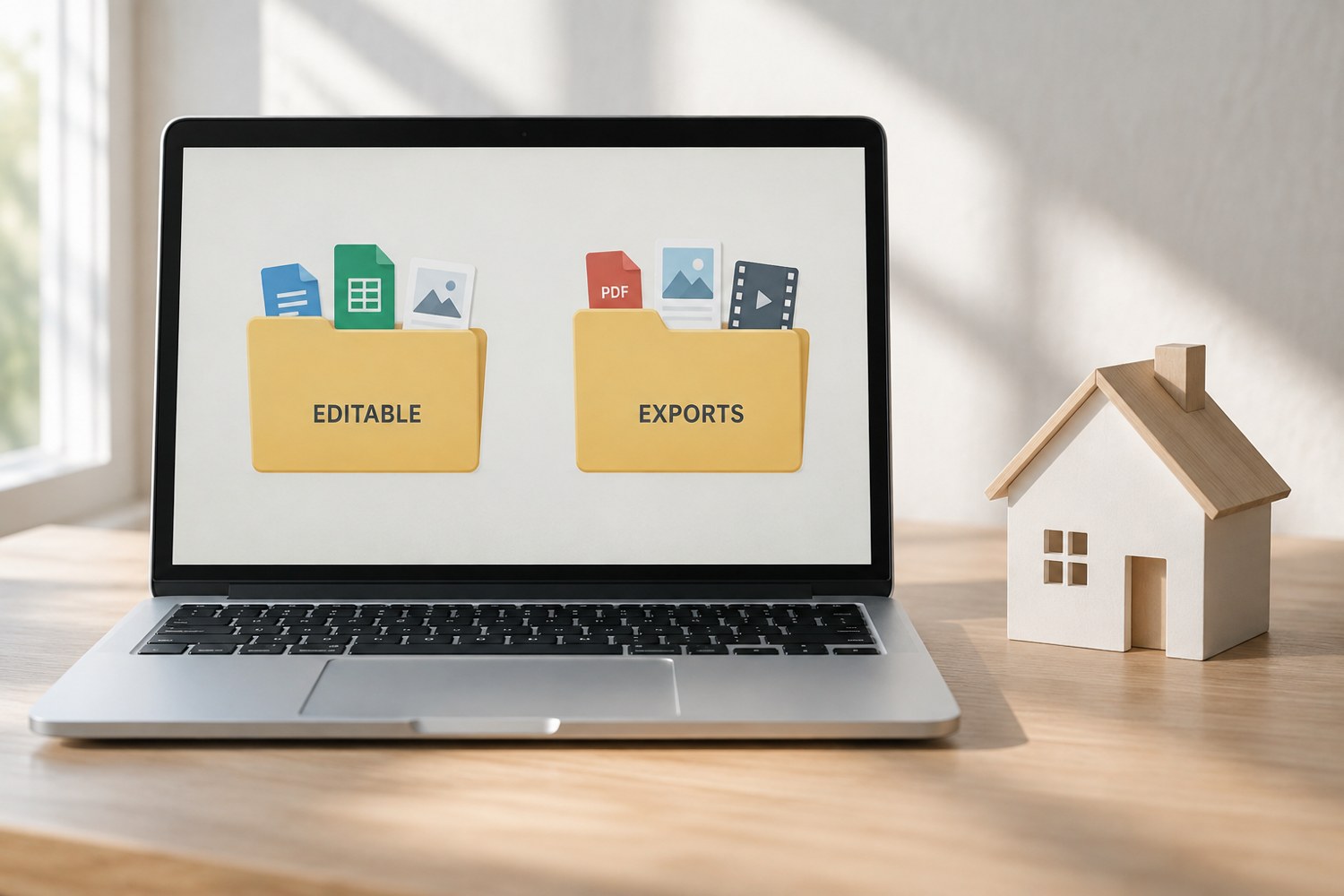
An exported mesh is useful for transfer, but it may not preserve the sketches, parameters or editing history that made the object easy to change. Keep the native modelling file alongside the export in a clearly organised project folder. Treat them as related records with different purposes.
Use one folder for editable work and another for verified exports. A third small folder can hold reference images, permission notes and dimensions. Avoid scattering these across a desktop and a downloads directory where the connection between them depends on memory. The folder names need only be clear, not elaborate.
Before exporting, save the editable file under the intended revision. If the application depends on linked assets, check that the project can still be opened when moved to a new folder or machine. A file that opens with missing references is not a complete archive merely because its main document exists.
Include a short readme describing the application and version, the intended units, the main dimensions and the role of each exported part. Note any dependencies that are not included. Do not distribute third-party reference material unless its terms allow it; a source link and description may be more appropriate than copying the original file.
Verify an export by opening it separately and checking its dimensions and contents. Then record which editable revision produced it. This prevents a later modification to the source from silently becoming associated with an older mesh. If a printed test leads to a change, create a new revision rather than overwriting the only record of the tested geometry.
Keep at least one separate backup of important projects and periodically test that files can be restored. A folder synchronised across devices is convenient, but it does not replace understanding how deletions and revisions are handled by the chosen service. Use the service's own documentation when setting up recovery arrangements.
For a small terrain building, the archive might contain the editable scene, separate roof and wall meshes, a photograph of the fit test and a note about the accepted clearance. That collection tells a future maker what exists and why. Keeping only the final mesh would preserve the shape while losing much of the reasoning needed to repair or adapt it.
Another detail to explore
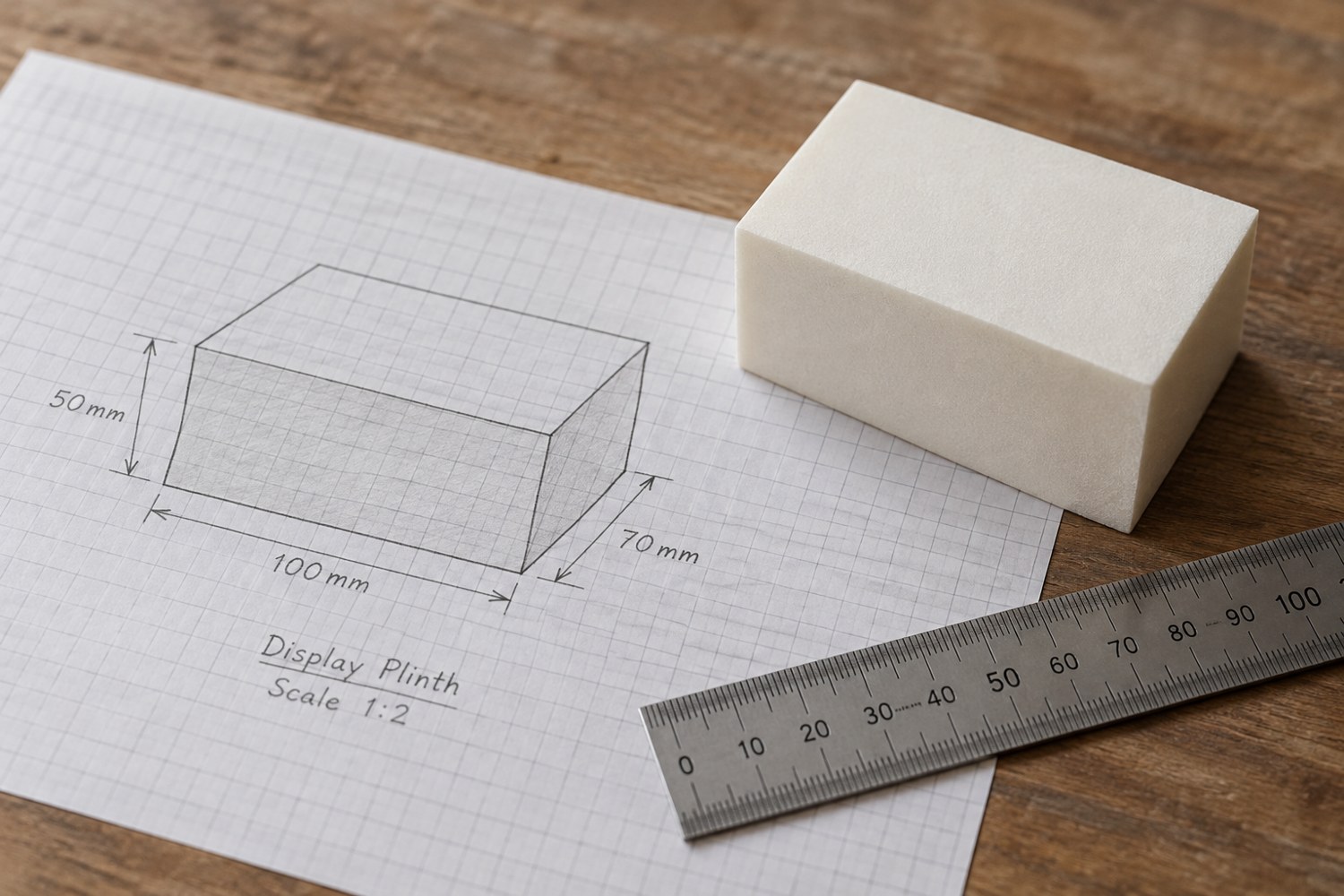
Start a model with dimensions instead of details
Build a short dimensional brief before adding bevels, textures or decorative features. It gives every later modelling decision a reference.
Read article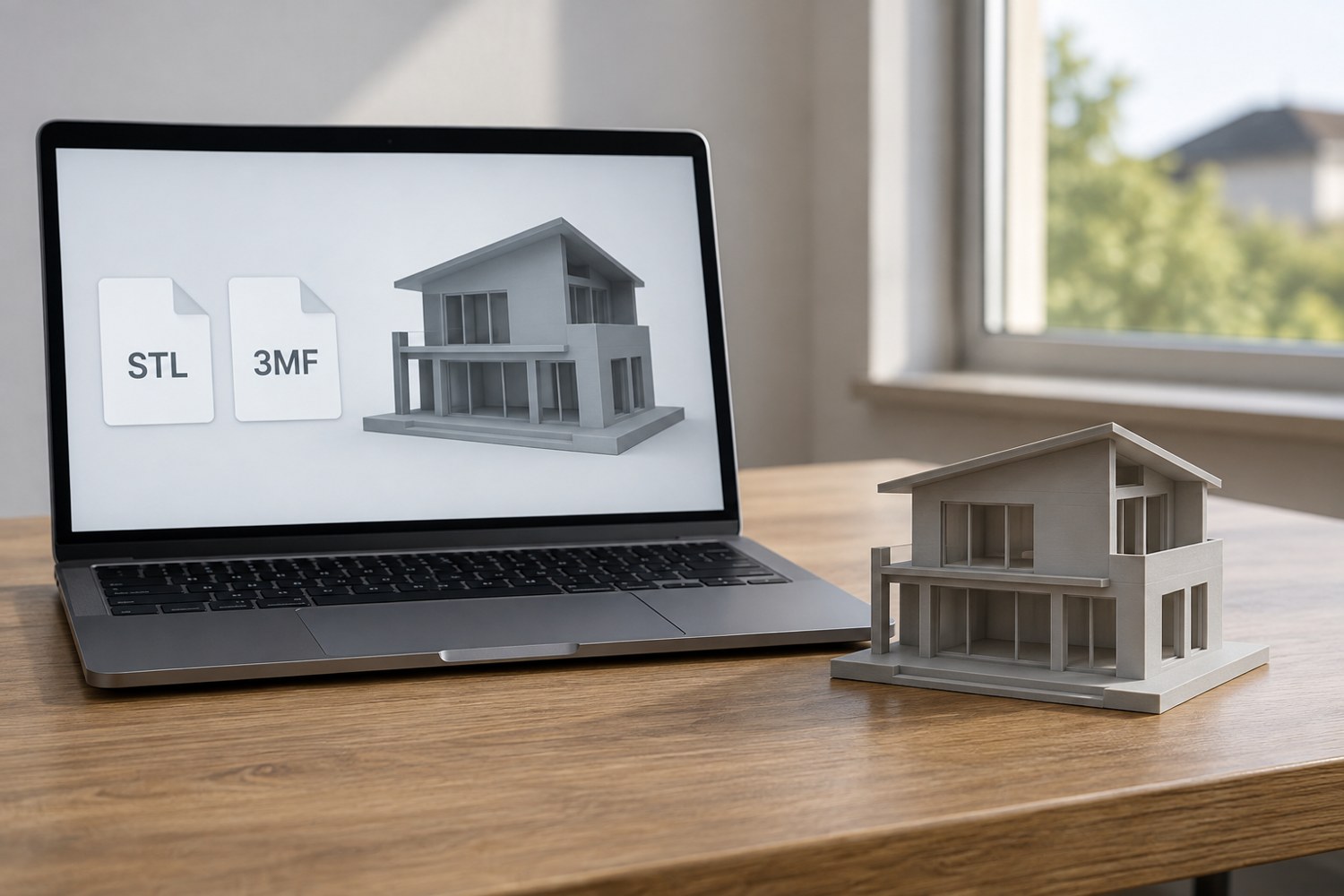
Understand STL and 3MF when sharing a print project
An STL mesh and a saved 3MF project can carry different information. Decide what a recipient needs before choosing the file to send.
Read article