Keep a record of paint colours for a terrain set
Keep colour recipes, application order and dried samples together for a terrain set painted over several sessions.
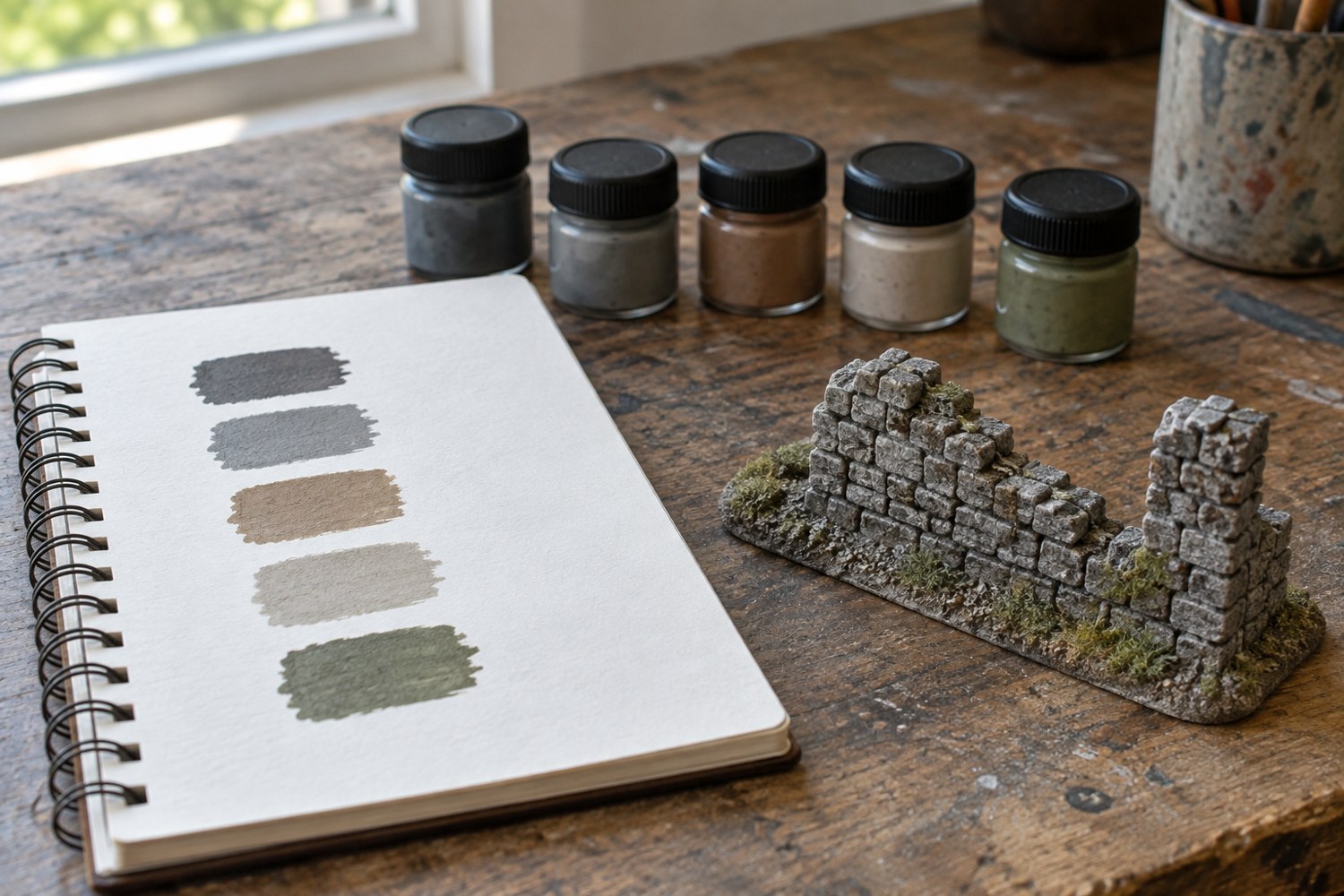
A terrain set can slowly drift in colour when each new tile is painted from memory. The difference may be subtle on the workbench and obvious when the pieces are placed together. Keep a small colour record from the first completed sample, including the base material and primer as well as the visible paint names.
Record the order of application. A dark base followed by a light dry-brush does not look the same as the reverse sequence, even with the same two bottles. Note where each colour belongs: cliff face, soil, path, roof or shoreline. A labelled photograph of the sample can connect the recipe to the actual areas more clearly than a list of paint names alone.
Keep a physical swatch on material prepared like the model. Let it dry according to the product instructions before treating it as the reference. If a varnish or other final coating will be used, include that step on part of the sample. The finished appearance is the combination of layers, not just the colour in the bottle.
Use a consistent way to describe mixtures. Approximate drops may be sufficient for a small decorative adjustment, but different dispensers and paint thicknesses make them imperfect measurements. For a large matching set, choose a more repeatable method appropriate to the products or prepare enough of a documented mixture for the planned session. Follow storage guidance rather than keeping improvised mixes indefinitely.
Compare new pieces beside the reference under the same light before completing the entire batch. A quick photograph can help document the result, but automatic camera adjustments may disguise differences. Use the physical comparison for the decision and the photograph as a record.
When a product changes or becomes unavailable, make a replacement sample before applying it to a visible joining edge. Label the revision and decide whether to introduce it only in a new area or adjust the existing set. The record is not meant to prevent every variation; natural terrain can benefit from variation. It preserves the deliberate palette so that differences are choices rather than consequences of forgotten mixtures.
Another detail to explore
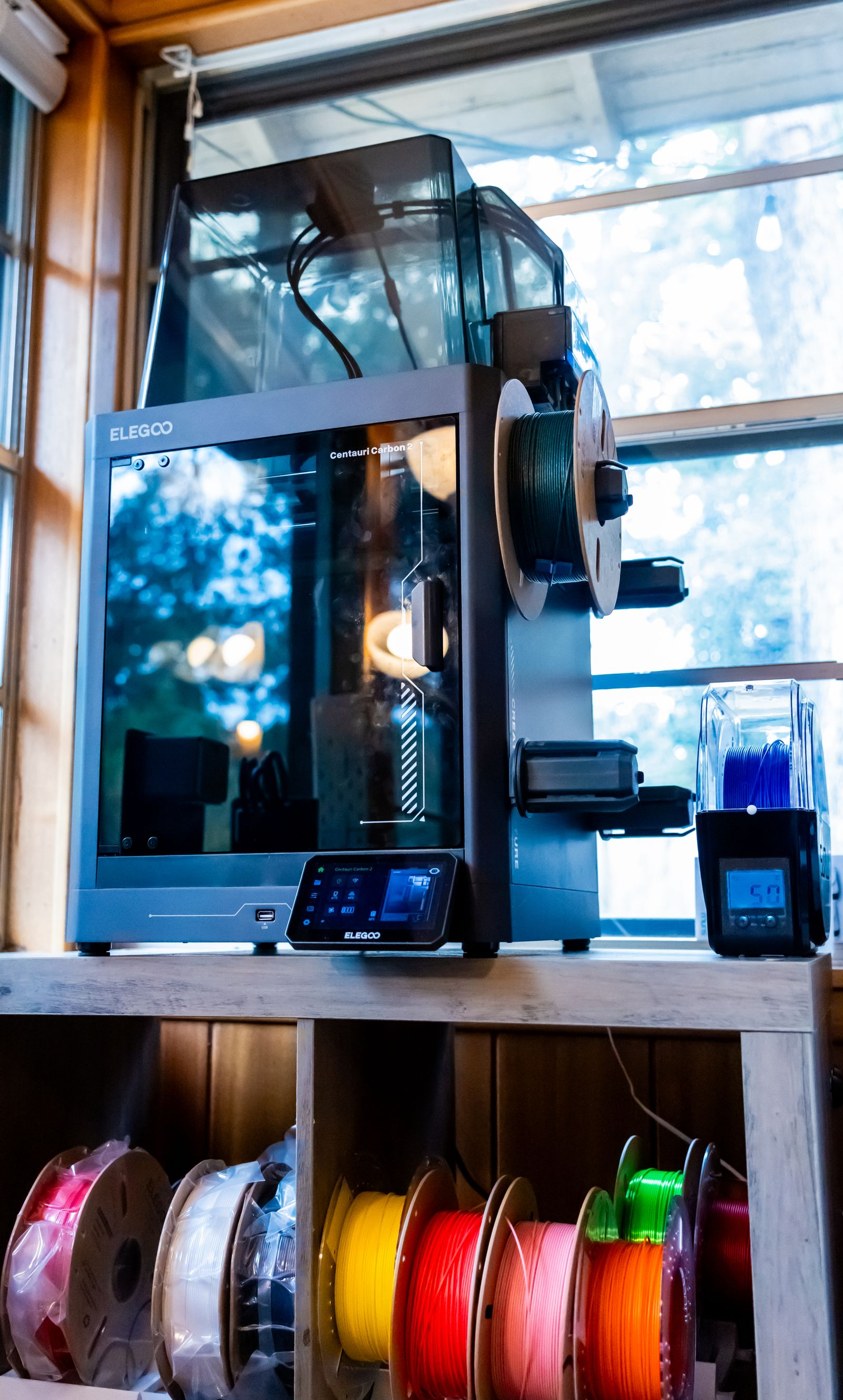
Store filament with a label you can actually use
Keep material identity, opening date and profile information with the spool through storage and use.
Read article
Choose between PLA and PETG for an indoor model
Choose material around handling, shape and finishing rather than treating one polymer as a universal upgrade.
Read article