Decide when a replaceable nozzle is worth keeping
Keep a spare nozzle when it matches a documented need and the exact hotend configuration.
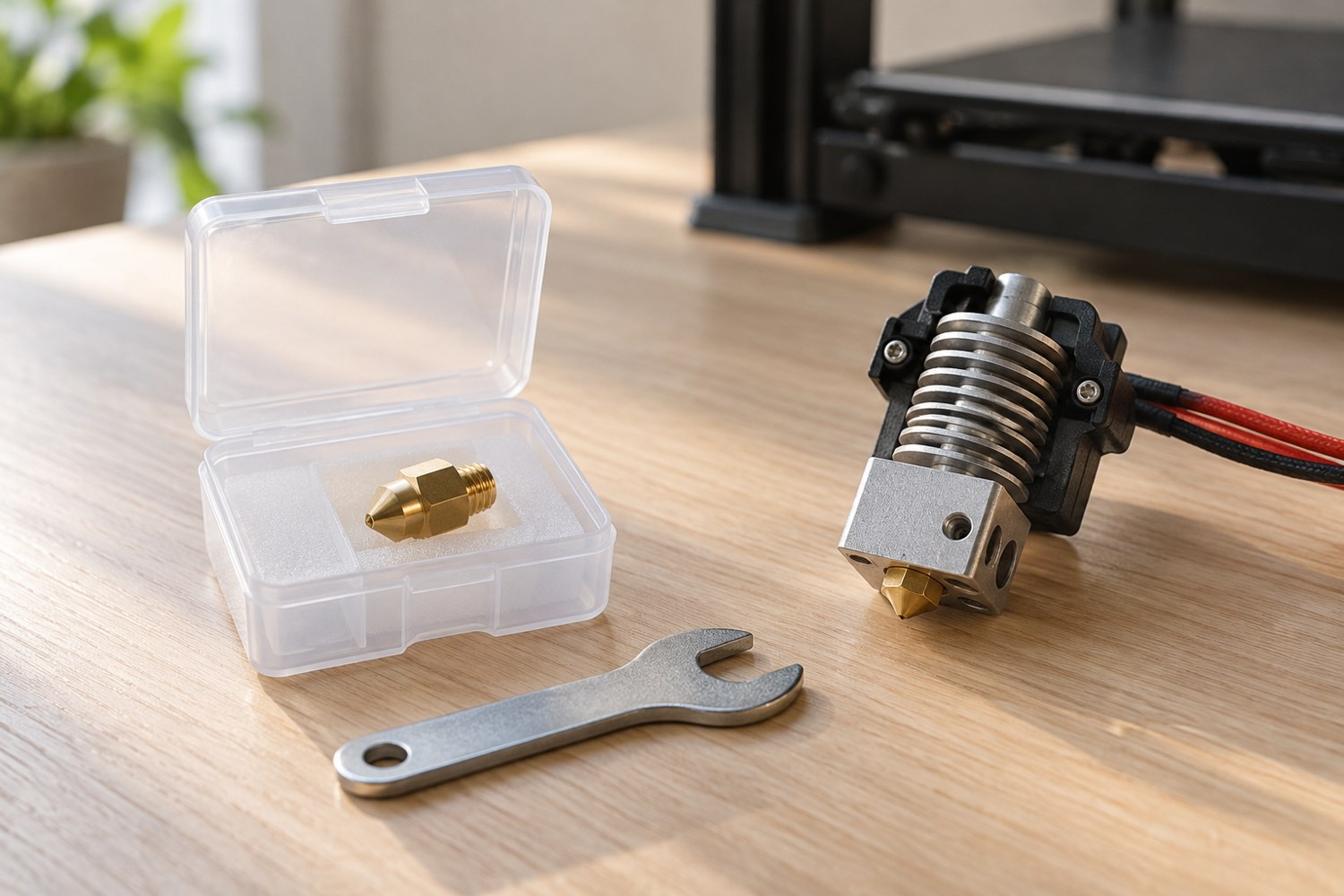
A spare nozzle can reduce downtime, but a drawer of vaguely compatible nozzles can create its own problems. Identify the printer's exact hotend system and the replacement parts approved for it. Thread appearance and advertised diameter alone do not establish compatibility. Keep the manufacturer's part number or specification with the spare.
Decide why you want it. A like-for-like spare supports a documented replacement when needed; a different diameter supports a different printing setup; an abrasion-resistant nozzle may be required by a particular material. Those are separate purposes. Buying one item to serve all three without checking the specifications can leave you with the wrong part at the wrong time.
Prusa's nozzle guidance distinguishes nozzle systems and materials, including the faster wear that abrasive filament can cause on ordinary brass. It also shows that replacement procedures differ between hotend designs. Follow the instructions for the actual machine and nozzle rather than generalising a hot-tightening or cold-swap method from another model.
Store each spare in a labelled protective container. Include diameter, material, compatibility and whether it is new or previously used. A used nozzle should not return to the new-parts compartment simply because it has been wiped clean. If its history is uncertain, mark that uncertainty rather than assigning it a precise remaining life.
Keep the required tools and instructions accessible, but do not replace a nozzle automatically for every print defect. A feeding issue, profile mismatch or contaminated surface can produce symptoms that a new nozzle will not solve. Work through the manufacturer's diagnosis before treating a consumable as the universal cause.
After a justified replacement, update the printer and slicer configuration as required and perform the documented checks. Save a small reference print before beginning a long project. Record the installation date and reason in the machine notes. A spare is worth keeping when it has a clear role in a maintained setup, not merely because it is inexpensive enough to accumulate.
Another detail to explore
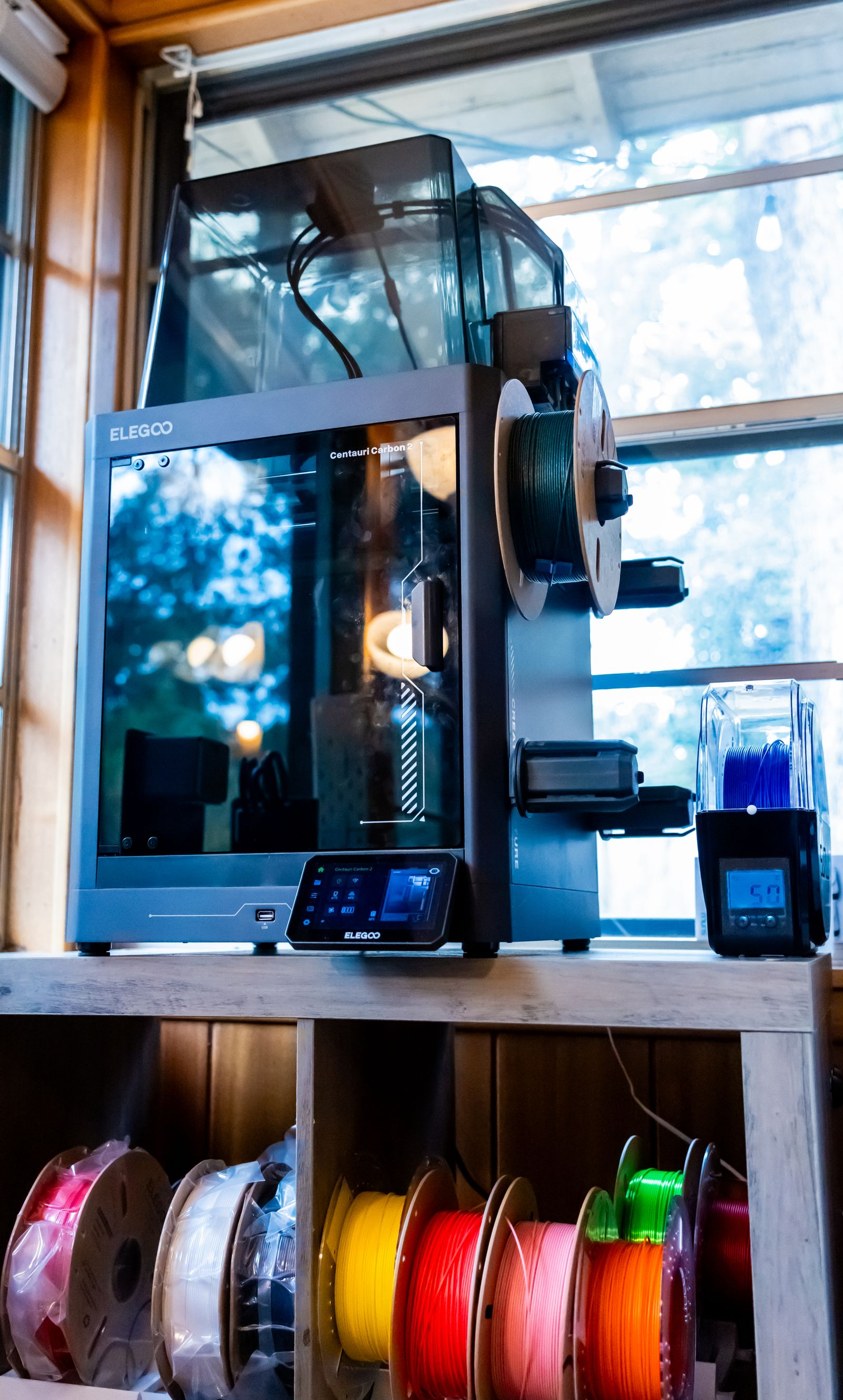
Store filament with a label you can actually use
Keep material identity, opening date and profile information with the spool through storage and use.
Read article
Choose between PLA and PETG for an indoor model
Choose material around handling, shape and finishing rather than treating one polymer as a universal upgrade.
Read article