Create readable weathering on a harbour structure
Place weathering where water, handling and exposed edges would leave different marks on a harbour structure.
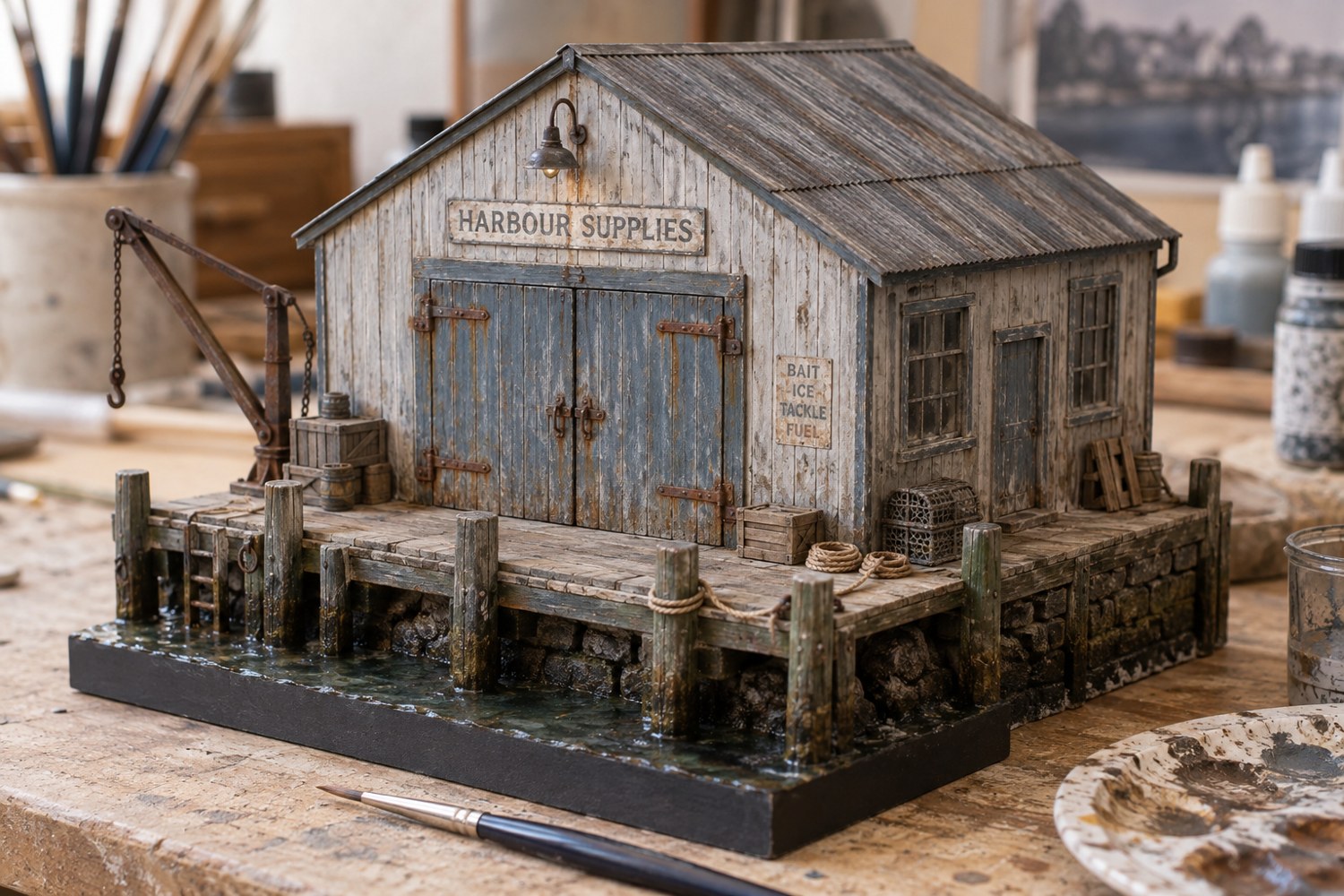
Harbour weathering is more readable when each mark has a reason. Begin by separating materials: painted timber, exposed metal, masonry and roof surfaces will not all show the same pattern. Choose a few prominent locations before applying effects across the whole structure.
Study the shape of the model. Horizontal ledges, fasteners, joints and areas beneath an overhang suggest different routes for moisture and wear. Use those features to place marks. Random streaks of equal length can make a wall look decorated rather than exposed to a working environment.
Keep the original material visible
Paint the structure cleanly enough that its underlying material and colour remain recognisable. Then test the weathering on a spare panel or hidden sample. Use products compatible with the base coat and follow their instructions. A weathering medium that can be adjusted on one finish may stain or disturb another.
Start with one local effect, such as a restrained dark line beneath a ledge or a small area of worn paint near a doorway. View it at normal distance. Increase the effect only if it helps describe the structure. On a tiny building, a broad orange patch can dominate the entire wall even when it looked modest on the brush.
Vary the length and strength of vertical marks, and connect them to a visible starting point where appropriate. Leave clean or quieter areas between them. Strong contrast everywhere removes the distinction between frequently used, sheltered and exposed surfaces.
Consider contact with people and equipment. A loading door may have different wear from a high wall that is rarely touched. Keep the route through the scene clear so those marks support a believable activity. Do not add damage to every corner simply because a sponge or brush makes it easy.
Take a monochrome photograph after the first pass. If weathering has become the strongest visual element, reduce selected areas with the base colour or stop before extending it elsewhere. Keep a record of the sequence for neighbouring harbour buildings, but vary the placement according to each building's role. Shared colours can unify a dock while different wear patterns show how its structures are used.
Another detail to explore
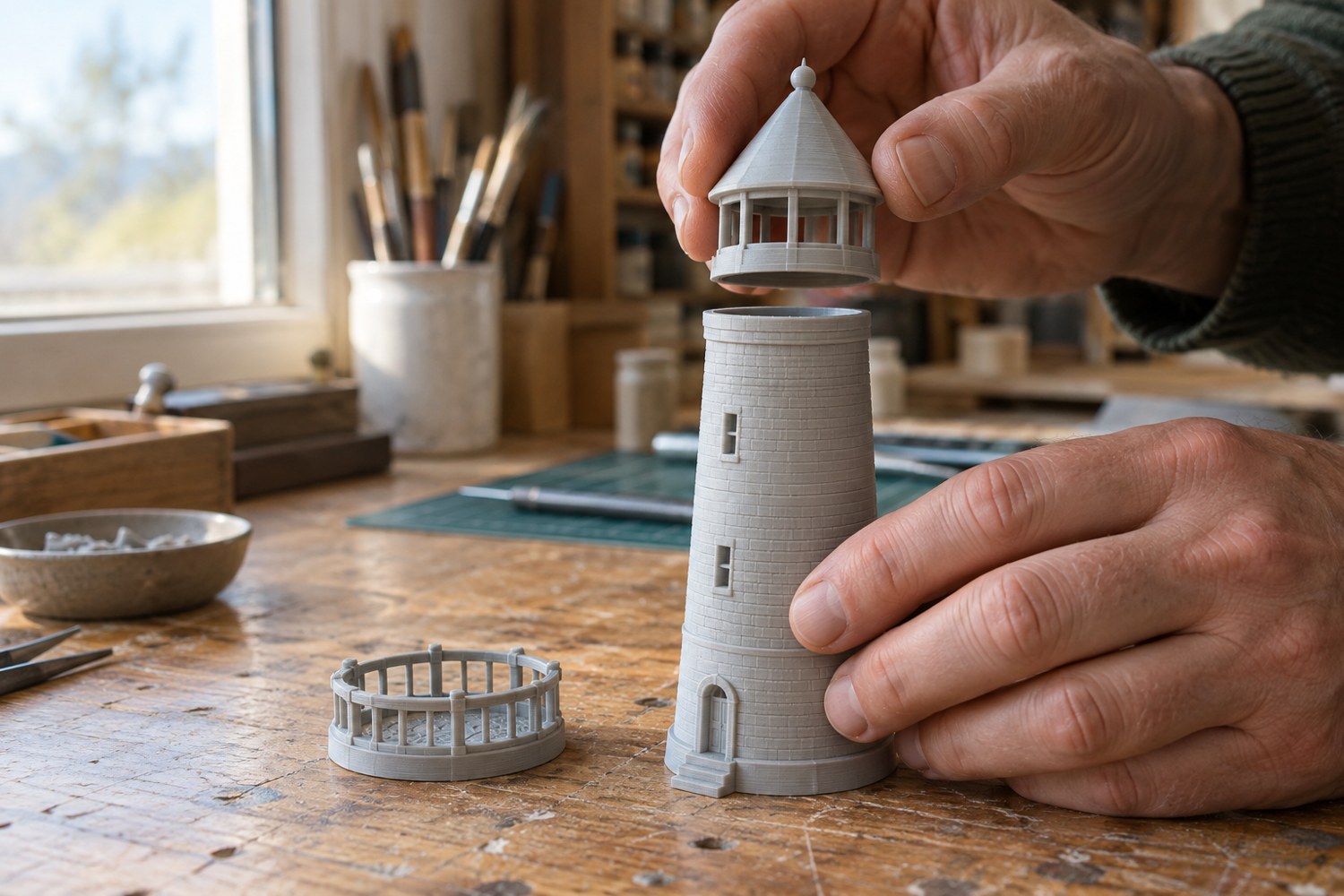
Dry-fit a printed model before reaching for glue
Check alignment, access and assembly order with temporary placement before an adhesive makes the decision permanent.
Read article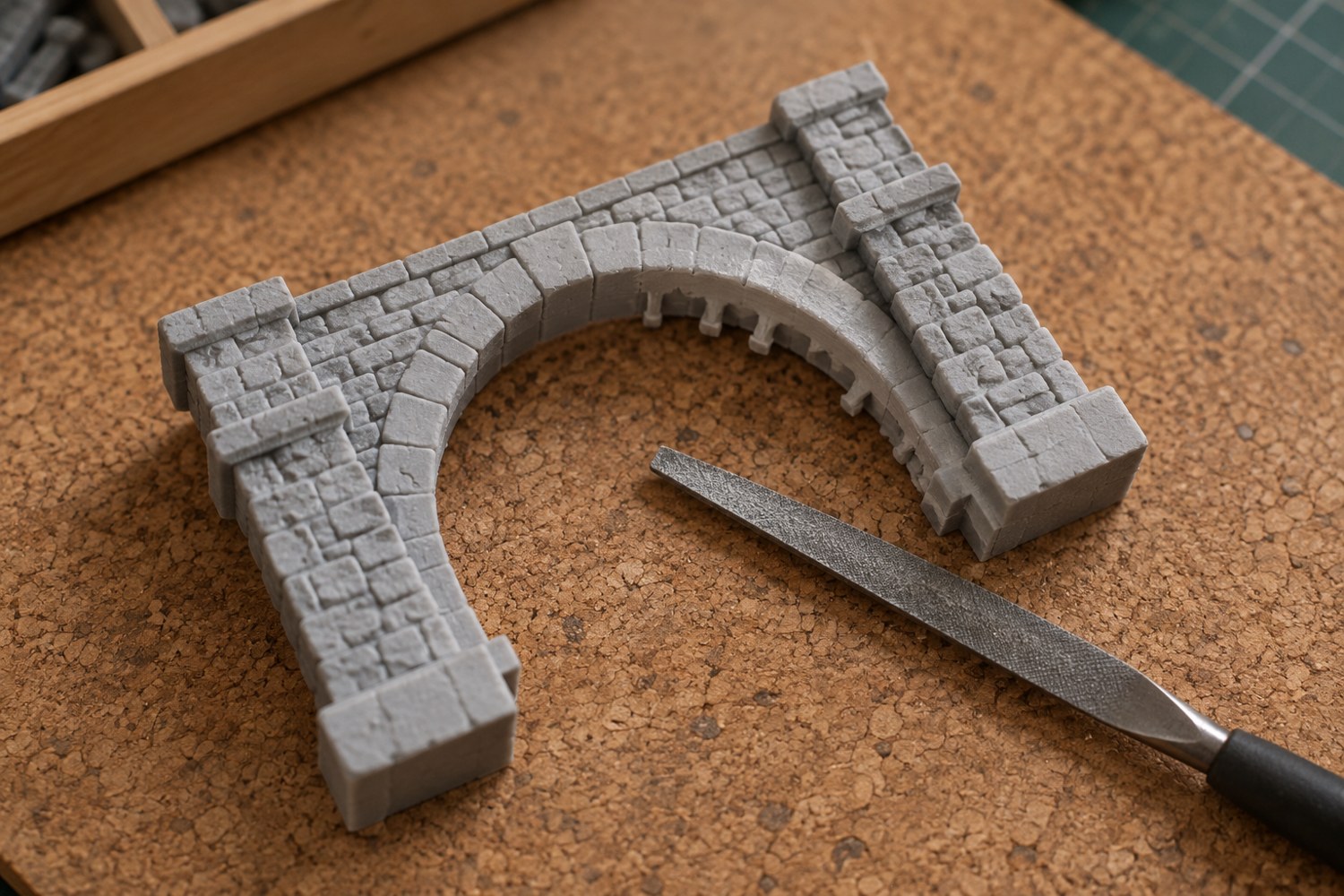
Remove support marks without flattening the model
Identify each support scar and protect the surrounding shape before removing material from a finished print.
Read article