Choose brushes for base coats and small details
Choose brush shapes around the surfaces you need to paint, with a separate tool for rough texture work.
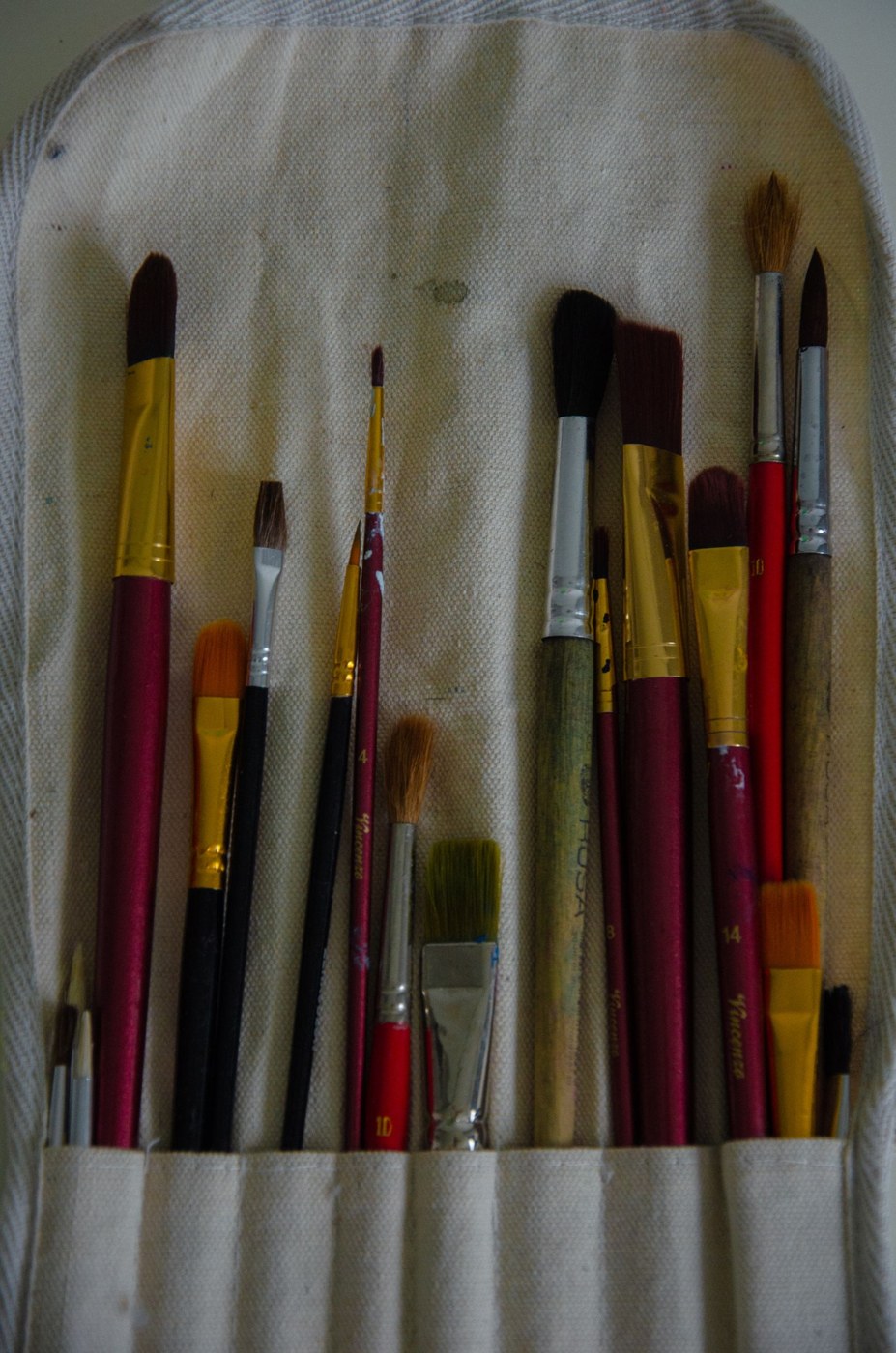
The smallest brush is not automatically the easiest brush for small work. A brush that holds a useful amount of paint and returns to a controlled point can make a short line more consistent than one that dries before the stroke ends. Judge the brush by its behaviour with your paint and the shape you need to reach.
For broad base coats, choose a shape that covers the surface without repeatedly touching adjacent details. A flat or rounded brush may suit a wall or rock face, while a pointed brush can reach corners. Test on a spare piece with similar texture. The goal is even placement, not simply finishing the largest area in the fewest strokes.
Keep a separate brush for rough ground, stippling and dry-brushing. Those motions can be hard on a fine point. A brush that no longer gives precise detail control may still be useful for texture, provided its loose fibres do not shed into the paint.
For a small window, think about whether you need a dot, a line or a filled rectangle. Use a brush size that supports that motion. Turn the model so your hand can make a comfortable stroke instead of forcing the brush around a difficult angle. Rest your hands where possible without touching wet surfaces.
Do not load paint all the way into the metal ferrule. Keep the working paint near the usable bristles and clean according to the brush and paint manufacturers' guidance. A brush left standing on its tip can lose its shape. Store it so the point is not pressed against the bottom of a container.
Evaluate brushes with a few repeatable marks on a sample: a broad patch, a narrow line and a dot. Notice how often you need to reload and whether the point remains controlled. This tells you more than a size number, which can vary between ranges.
Build the collection gradually around tasks you actually perform. One broad brush, one controlled point and a texture brush may cover a small terrain project. Add another only when a specific surface or technique exposes a limitation. Keep worn brushes identified so a rough cleanup tool is not accidentally used for a delicate final highlight.
Another detail to explore
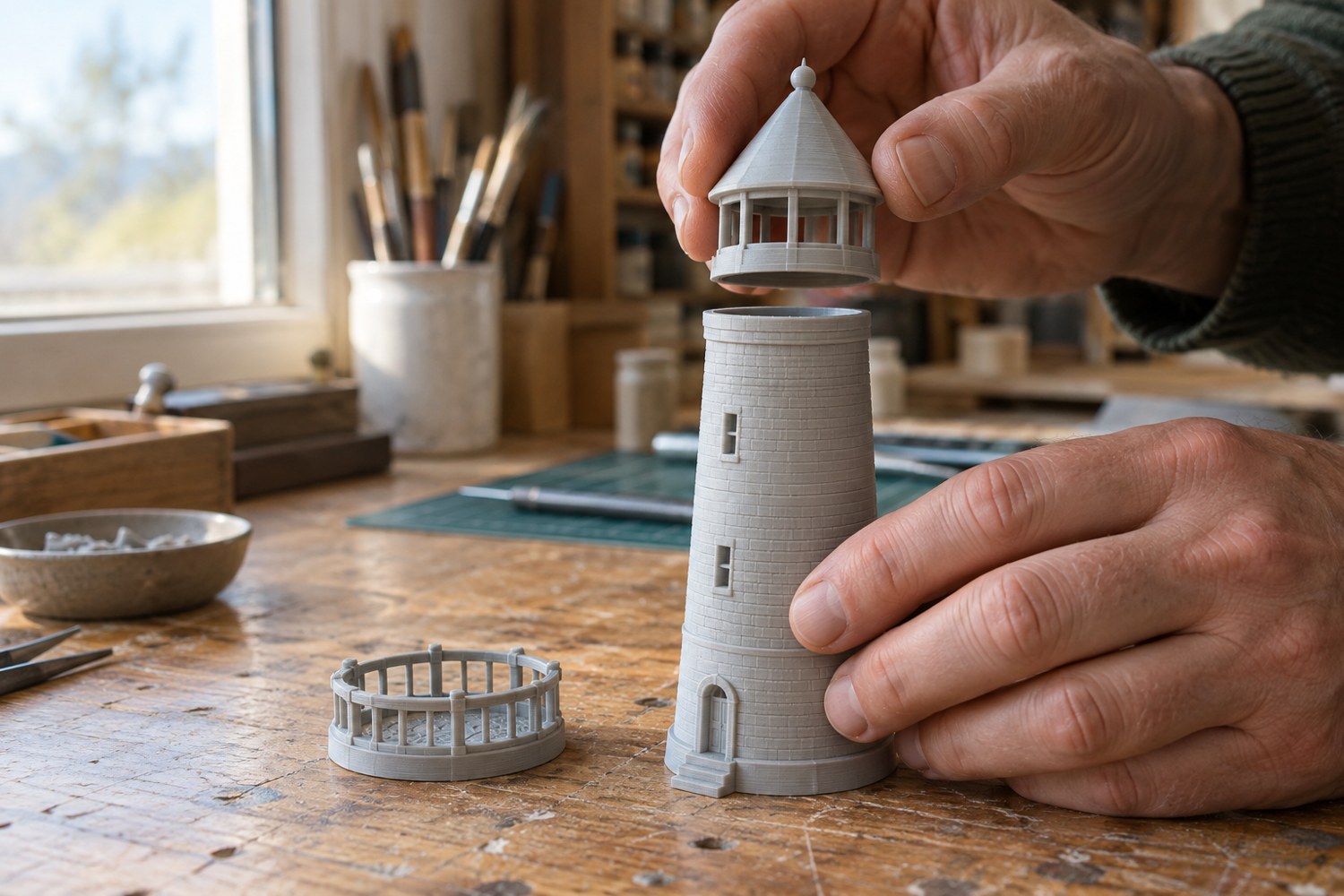
Dry-fit a printed model before reaching for glue
Check alignment, access and assembly order with temporary placement before an adhesive makes the decision permanent.
Read article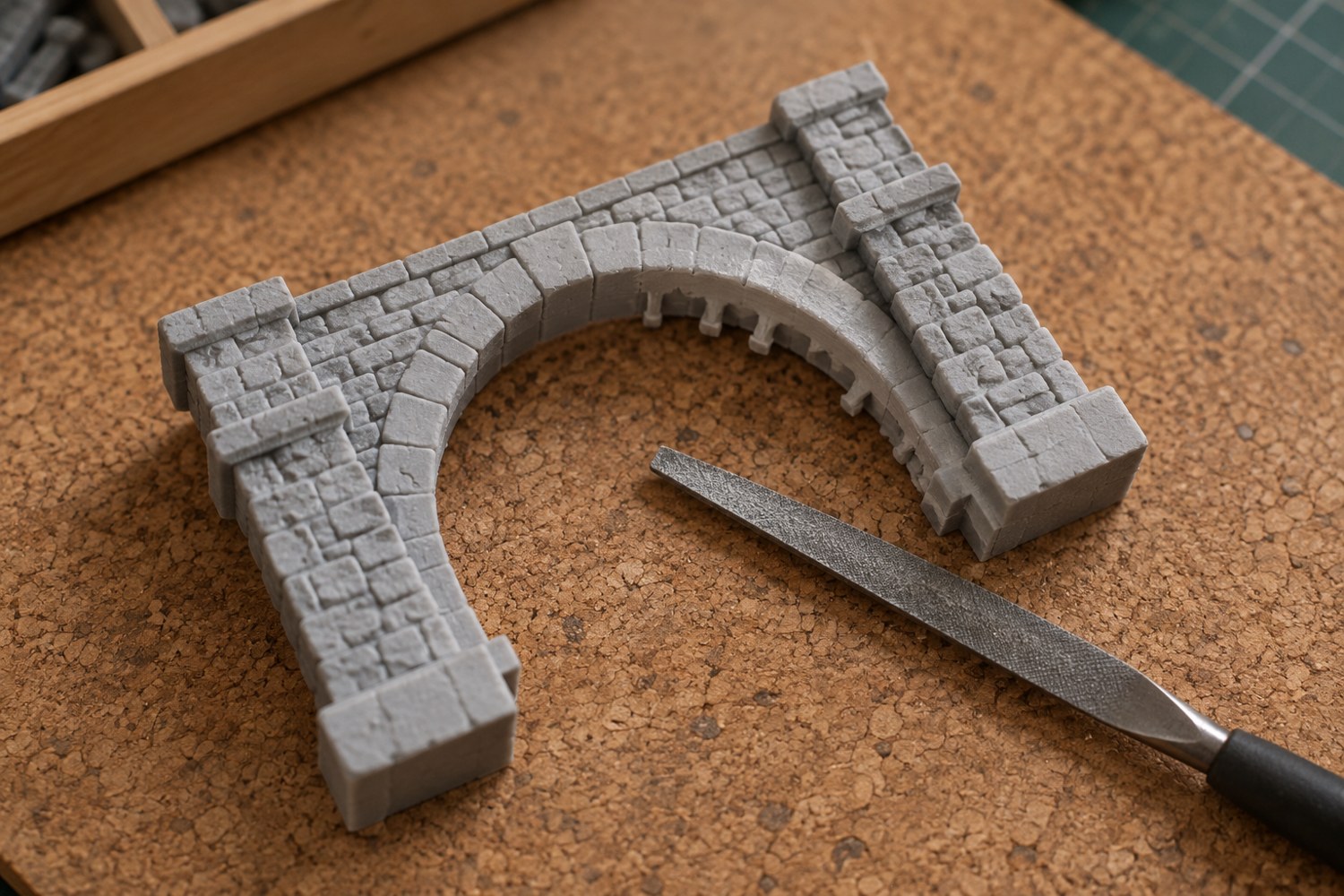
Remove support marks without flattening the model
Identify each support scar and protect the surrounding shape before removing material from a finished print.
Read article