Choose a focal point for a miniature village
Use shape, contrast and open space to give a miniature village one clear centre of attention.
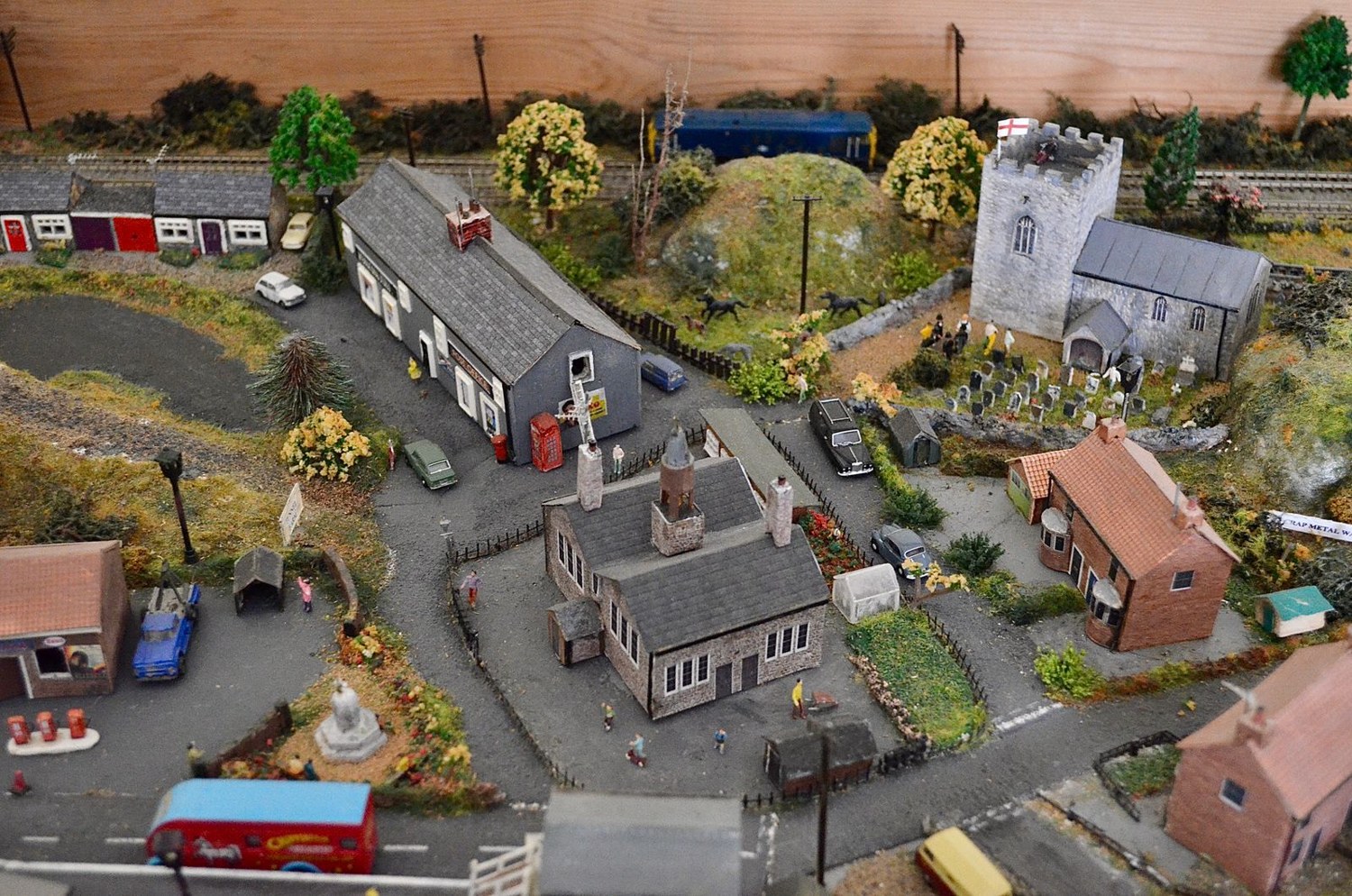
A village does not need a tower to have a focal point. A pale doorway at the end of a dark lane, a small square between houses or one roof turned towards the viewer can organise the scene. Choose the moment you want the viewer to notice before deciding which building is largest.
Make paper footprints for all the buildings and lay them on the base. Group several close together and leave one deliberate opening. The gap should lead towards the chosen subject. If every house has equal spacing and the same orientation, the result may resemble a catalogue display rather than a settlement.
View the arrangement from its intended front. Check the rooflines as silhouettes. A chimney directly behind a tower can create an accidental extra shape, while a roof peak touching a tree can make both harder to read. Move one object a small distance and compare photographs; the improvement often comes from separation rather than extra decoration.
Keep the busiest signs, brightest colours and strongest weathering near the focal area. Elsewhere, allow larger unbroken surfaces. This does not mean painting every secondary house identically. Vary roof tones and small details while keeping their overall contrast lower than the subject you want to emphasise.
A path or fence can guide attention, but it should connect plausible places. Run a lane from an entrance towards the square instead of ending it at the base edge without explanation. A cropped road can work if its direction suggests that the settlement continues beyond the model.
Try removing one building from the composition. If the scene becomes clearer, keep the space. Empty ground can show a gathering place, a garden or a route through the village; it is not automatically an unfinished area. Add a simple scale reference temporarily to confirm that the opening remains believable.
Before fixing anything, photograph the layout in monochrome and at a small thumbnail size. The focal point should remain identifiable without reading individual windows. If it disappears, change one large relationship: lighten the subject, darken the area behind it or widen the approach. Save the detailed market stalls and tiny tools for later. They can reinforce an established centre of attention, but they rarely create one from a confused arrangement.
Another detail to explore
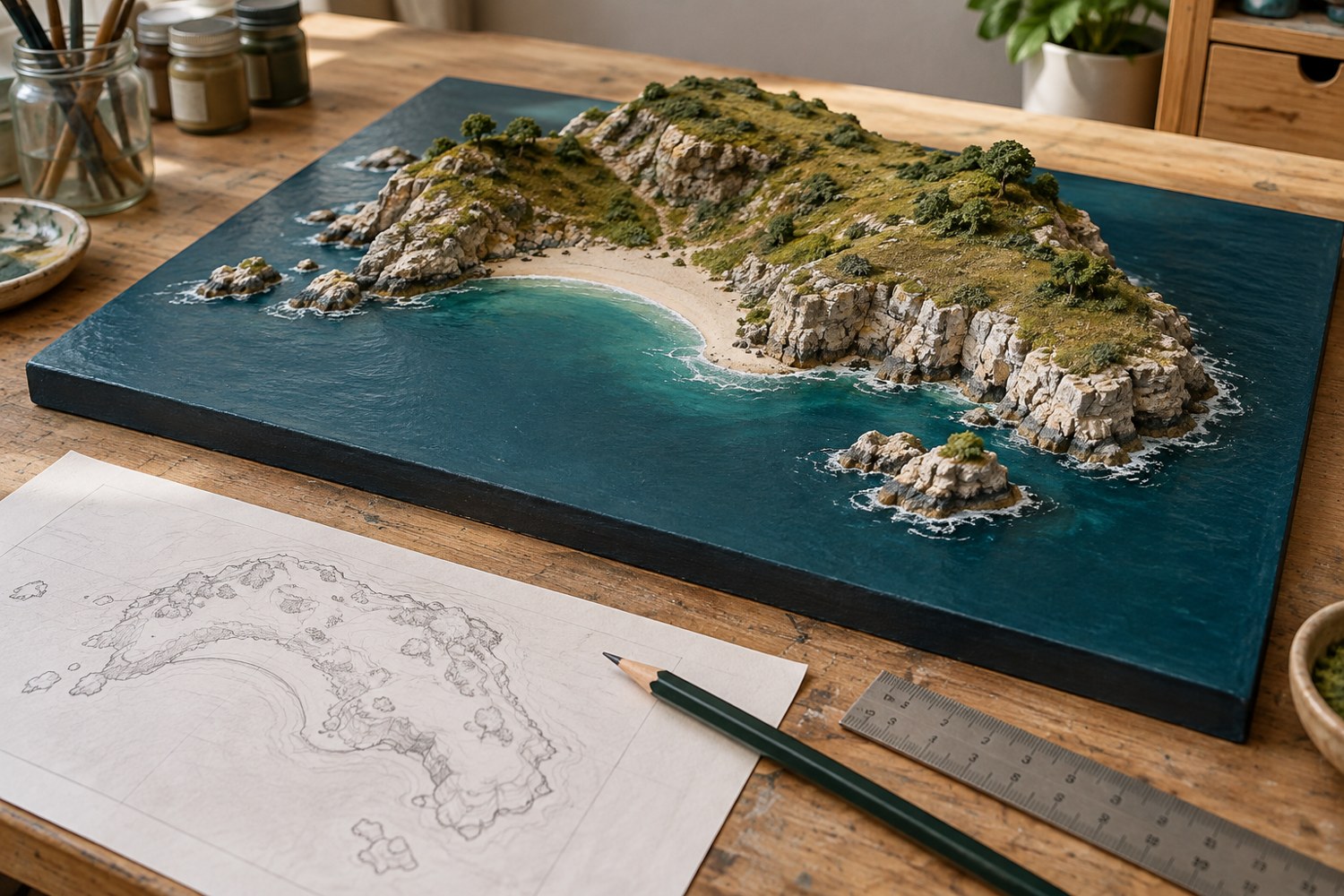
Plan an island diorama before building the coastline
Turn an island idea into a buildable composition by deciding the viewing angle, scale, shoreline and assembly order on paper first.
Read article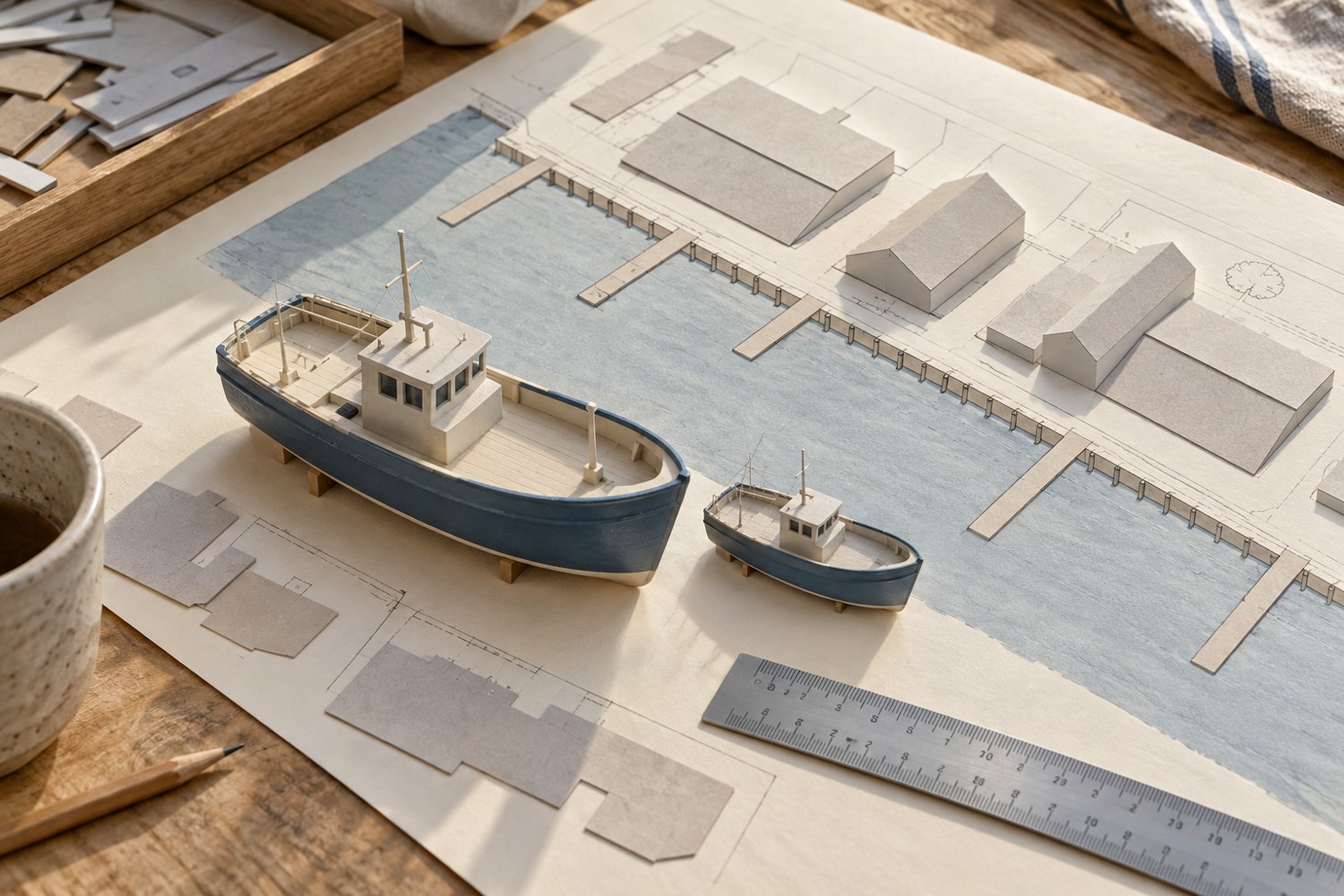
Choose a scale for a miniature harbour
Use the largest boat and the available footprint to choose a harbour scale before buying buildings and fittings.
Read article