Build visual depth into a small landscape base
Separate foreground, middle distance and skyline with overlapping forms that remain clear from the intended viewing angle.
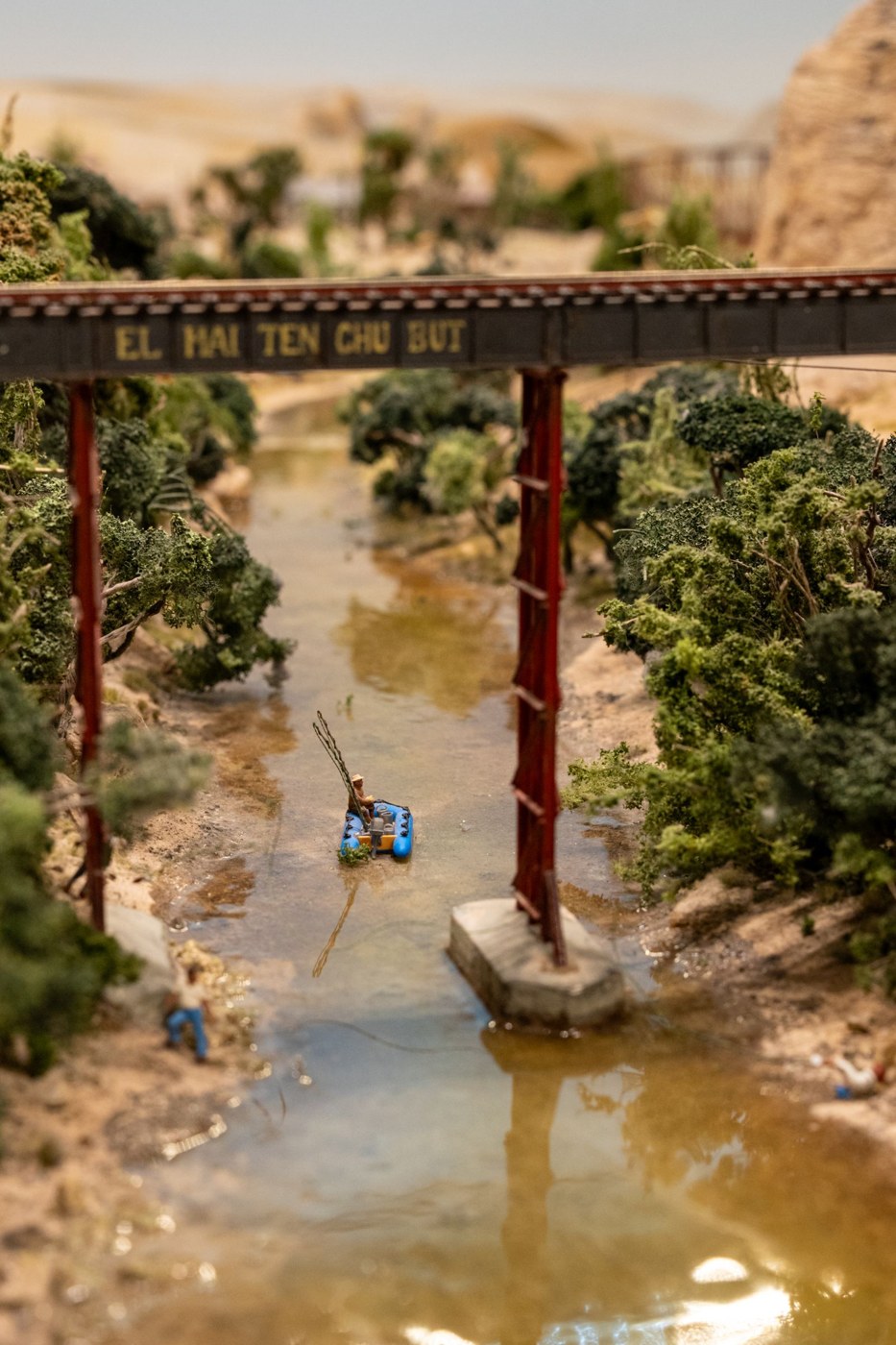
A landscape base does not need to be deep to suggest distance. It needs readable layers. Place a low foreground shape, a main subject in the middle and a quieter rear silhouette. The spaces between those forms are as important as the forms themselves. Three equally detailed ridges at equal spacing can resemble steps rather than a landscape.
Start with three pieces of folded card. Put the tallest at the rear, but offset it from the main building or tree. Look from the height at which the finished base will be displayed. An overhead view can hide the problem of a front ridge blocking everything behind it. Lower the front edge until the intended subject has a clear approach and an uninterrupted outline.
A path that passes behind a rock and appears again further uphill gives the viewer a sequence to follow. Leave enough of both sections visible to explain the connection. If it vanishes into a wall and never returns, it reads as an unfinished route. Similarly, a line of trees can overlap a hill while leaving a small gap that reveals the land beyond.
Avoid placing every feature directly on the centre line. Try a foreground rock on one side and a building on the other, joined by a curved path. Check the empty area between them: it should have a shape you can recognise, not merely leftover space. A harbour inlet or pale field can provide this quieter interval.
Colour can support the arrangement after the geometry works. Make a small painted study using only broad patches. Reserve the strongest dark-light contrast for the main subject. Soften the rear layer by reducing the number of sharp colour changes, rather than automatically painting all distant objects blue. The palette should still belong to the weather and setting you chose.
Take one photograph in monochrome. If the subject disappears into the background, adjust a neighbouring value or shift the silhouettes apart. Adding more grass or stones will rarely solve that particular problem. Keep the rough blocks until the final terrain is ready so you can compare the finished composition with the original plan. A small base benefits from deliberate omissions: one clear bend in a path often explains depth better than several competing landmarks.
Another detail to explore
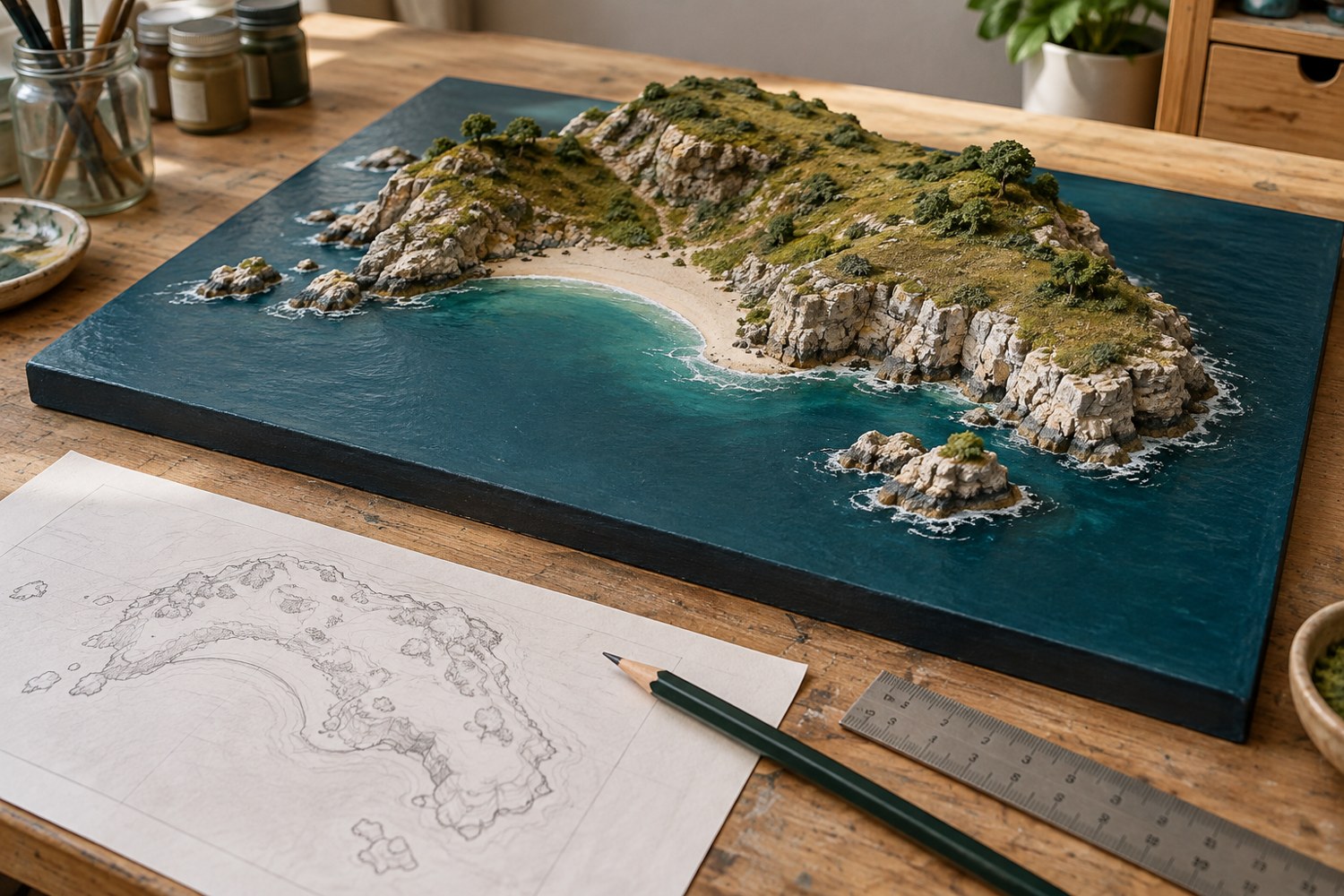
Plan an island diorama before building the coastline
Turn an island idea into a buildable composition by deciding the viewing angle, scale, shoreline and assembly order on paper first.
Read article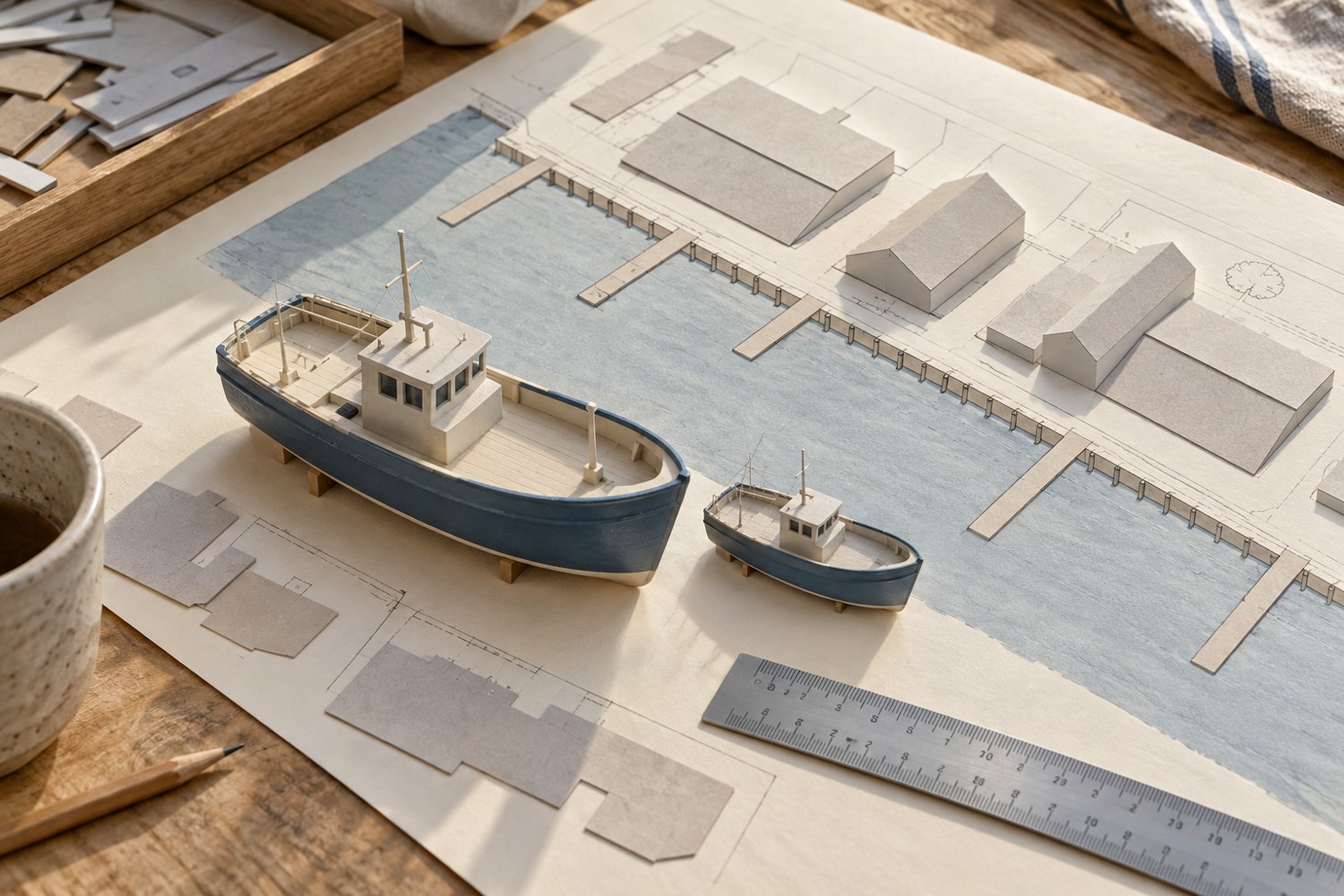
Choose a scale for a miniature harbour
Use the largest boat and the available footprint to choose a harbour scale before buying buildings and fittings.
Read article